

How to Help an Alcoholic in Denial: Understanding Alcoholism, Denial, and When to Take Action
Loving someone who is struggling with alcohol use can be heartbreaking—especially when they refuse to see a problem. An alcoholic in denial may insist everything is “under control,” dismiss concerns, or even turn the conversation back on you. Over time, denial can leave partners, friends, and family members feeling confused, exhausted, and unsure of what to do next.
This guide explores alcoholism and denial, why it happens, how it shows up in relationships, and—most importantly—how to help an alcoholic in denial without escalating conflict or enabling harmful patterns. If you’re feeling stuck between wanting to help and needing to protect yourself, you’re not alone.
Alcoholism and Denial: What It Is and Why It Happens
Alcoholism denial isn’t just a matter of stubbornness — it’s a psychological and cognitive phenomenon rooted in how individuals perceive risk and loss. In large national surveys, roughly 11% of U.S. adults meet criteria for alcohol use disorder (AUD) in a given year, yet many underestimate the severity of their drinking behavior.
Research shows that people with AUD often mischaracterize their consumption levels. For example, in one study, 67% of individuals diagnosed with alcohol dependence described themselves as light or moderate social drinkers, underestimating the risks and consequences of their use.
This mismatch between statistical reality and personal belief is part of why alcoholics are in denial: the brain actively minimizes risk as a protective mechanism. Denial helps maintain emotional equilibrium, even when behavior poses significant harm. Cognitive health models highlight that denial stems from both emotional defenses and difficulty recognizing internal states — meaning that a person may honestly believe they’re not a problem drinker even when their use meets clinical thresholds.
Denial vs. “Not Ready Yet”: What You’re Really Hearing
There’s an important distinction between someone who truly does not recognize their drinking as a problem and someone who senses that something is wrong but isn’t emotionally ready to confront it. An alcoholic in denial may genuinely believe their drinking is normal, while someone who is “not ready yet” often feels a quiet awareness beneath the surface — paired with fear, avoidance, or overwhelm.
When denial is present, you may hear statements like:
- “I don’t drink that much.”
Even when evidence suggests otherwise, minimizing consumption helps reduce internal discomfort and protect self-image. - “Everyone drinks like this.”
Comparing themselves to others allows the person to normalize risky behavior and avoid standing out or feeling singled out. - “I’ll cut back after this stressful period.”
This pushes responsibility into the future, creating a moving target that delays meaningful change. - “I just need to manage my stress better.”
This reframes alcohol use as a stress response rather than a contributing problem.
These statements usually aren’t acts of defiance or dishonesty — they’re expressions of fear. Acknowledging a problem with alcohol means facing uncomfortable possibilities: loss of control, changes to identity, grief over coping mechanisms, or fear of what life might look like without drinking. For many people, denial feels safer than confronting uncertainty or imagining life without alcohol.
Understanding the difference between denial and emotional unreadiness can shift how you respond. Instead of arguing facts or pushing for immediate change, it may be more effective to focus on curiosity, empathy, and support — helping the person feel safe enough to eventually face what they may already suspect deep down.
Why Denial Feels So Convincing to the Person Drinking
Denial often feels compelling and logical to the person drinking because alcohol alters the very parts of the brain involved in insight and judgement. Heavy, chronic alcohol use can change neural circuits responsible for self-awareness and decision-making, making it difficult for someone to accurately gauge how their drinking impacts their life.
In fact, problem recognition is notably lower among those not engaged in treatment: studies show that people with hazardous or dependent patterns often report minimal concerns about their drinking, even when objective measures indicate serious risk.
Denial doesn’t mean someone chooses to ignore harm — it often reflects a deeply ingrained cognitive bias that protects the individual from uncomfortable truths. These biases become stronger over time, especially when drinking has long been used as a coping mechanism. Recognizing this can help loved ones approach the topic with empathy rather than frustration.
Signs of an Alcoholic in Denial
When someone is in denial about their drinking, certain patterns tend to show up again and again. These behaviors aren’t always about intent — they reflect a psychological defense pattern that keeps the person from confronting painful realities.
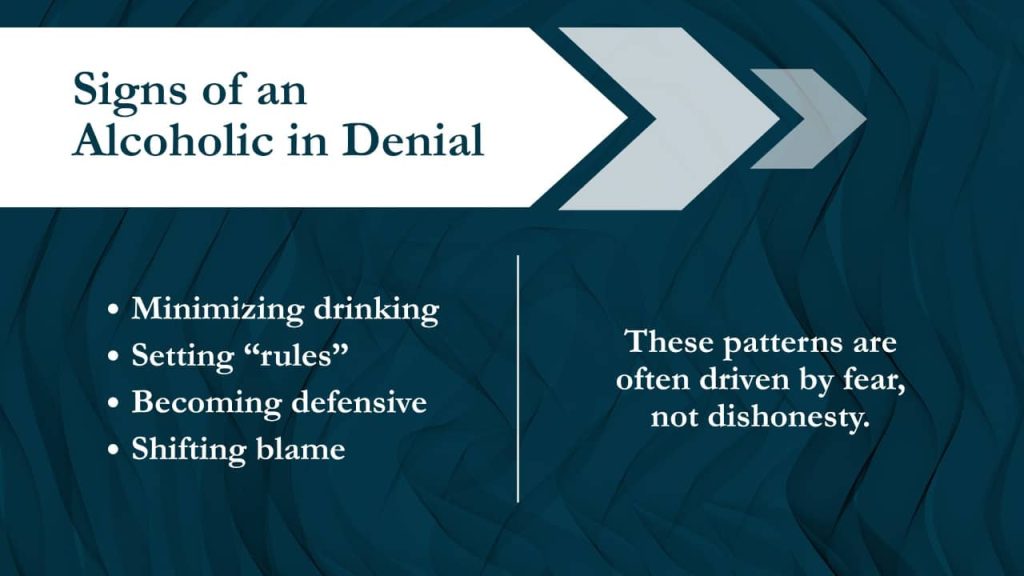
Minimizing, Rationalizing, and “Rules” About Drinking
A person might say “I only drink socially” or “I don’t drink every day,” even when their behavior meets clinical criteria for alcohol dependence. According to the diagnostic criteria used by professionals (such as DSM-5), patterns like unsuccessful attempts to cut down, continued use despite problems, and withdrawal symptoms are key features of AUD — even if the person doesn’t see it that way.
This type of minimization creates an illusion of control, which makes the denial feel true to the person using alcohol.
Defensiveness, Anger, and Turning It Back on You
Defensiveness is also common. Instead of hearing concern, a person in denial may respond with irritation, blame, or deflection. This emotional reversal is a common defense pattern in addiction, and it can leave loved ones feeling invalidated or unsure of how to proceed.
The Most Common Alcoholic Denial Excuses
Alcoholic denial excuses often sound reasonable on the surface—but they shift constantly.
“I Can Stop Anytime” and Other Moving-Goalpost Promises
Promises to stop “soon” or “after one last event” are common. The timeline keeps changing, which allows drinking to continue indefinitely. This pattern can be especially painful for loved ones holding onto hope that change is coming.
Alcoholic Denial and Lying: Secrecy, Half-Truths, and Story Changes
Alcoholic denial and lying often go hand-in-hand. This may include hiding bottles, downplaying quantities, or changing stories about when or how much they drank. These behaviors aren’t about moral failure—they’re about protecting access to alcohol and avoiding shame.
Relationship-Specific Red Flags: Spouse, Partner, Friend
Denial looks different depending on the relationship dynamic.
Alcoholic Husband or Wife in Denial: Patterns That Show Up at Home
An alcoholic husband in denial or alcoholic wife in denial may:
- Dismiss concerns as nagging
- Drink privately or after others go to bed
- Become emotionally unavailable or irritable
- Normalize binge patterns (“I work hard—I deserve this”)
For many spouses, the emotional toll becomes as damaging as the drinking itself.
Alcoholic Partner or Friend in Denial: What’s Different
An alcoholic partner in denial or alcoholic friend in denial may be easier to distance from—but harder to confront. Social settings can mask the severity of the issue, making it easier for denial to persist longer.
How Can You Help an Alcoholic in Denial?
Helping doesn’t mean fixing. And it doesn’t mean sacrificing your well-being.
How to Talk to an Alcoholic in Denial Without Escalating
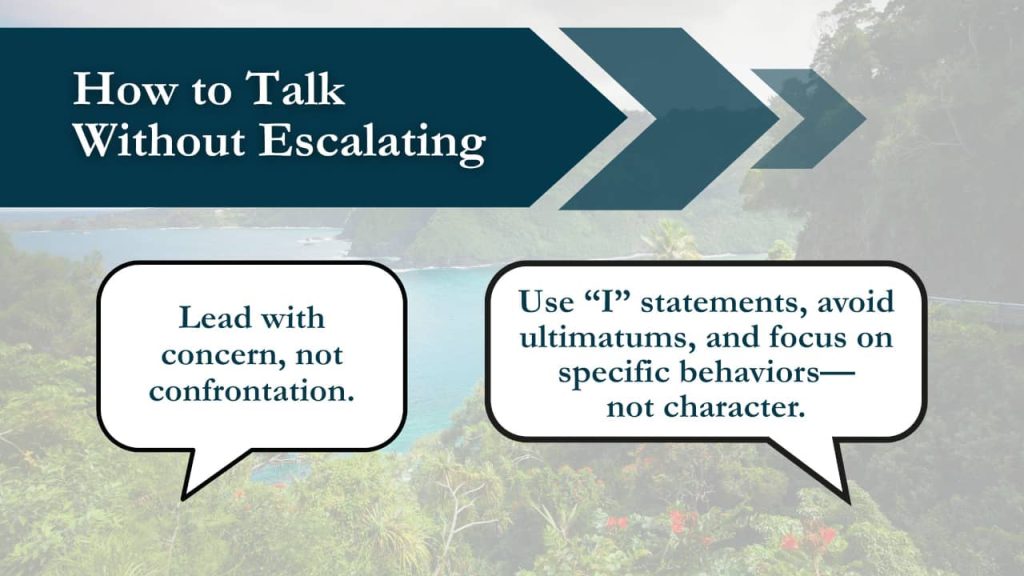
Approaching someone about their drinking is one of the hardest conversations you may ever have. Sounding confrontational or accusatory can push them deeper into denial.
Here are evidence-informed communication principles that reduce resistance:
1. Focus on specific behaviors not character:
Instead of saying “You have a problem,” describe what you’ve observed: “I notice you’ve been drinking more often, and I’m worried about how that affects your health.”
2. Use “I” statements:
This technique reduces defensiveness and keeps the focus on impact rather than judgement.
3. Avoid ultimatums unless safety is at risk:
While boundaries are essential, threats often trigger denial and withdrawal rather than openness.
Understanding these techniques helps keep the conversation accessible, rather than escalating into conflict.
How to Deal Day-to-Day Without Enabling
Supporting without enabling means:
- Not covering up consequences
- Not lying for them
- Not taking responsibility for their choices
Boundaries aren’t punishments—they’re protections. They help both of you stay grounded in reality.
Next Steps
When to Involve a Professional (Doctor, Therapist, Interventionist)
If denial is entrenched or safety is compromised, outside support matters. A physician can assess medical risk. A therapist can help navigate communication. A professional interventionist can structure a conversation that reduces defensiveness and increases the chance of acceptance.
Support for You: What to Do If You’re Burned Out or Feeling Unsafe
Supporting someone in denial can take a serious emotional toll. Research highlights that fewer than 25% of people with alcohol problems ever receive treatment, even though many would benefit from it. That means loved ones often shoulder the emotional load alone.
If you’re feeling overwhelmed, consider:
- Family or individual therapy: Neutral space to process frustration and strategies
- Support groups (Al-Anon, similar peer support): Community context reduces isolation
- Safety planning: If someone’s use threatens physical safety (e.g., driving intoxicated), professional involvement may be crucial
Taking care of your emotional health isn’t selfish — it’s necessary for maintaining healthy boundaries and modeling stability.
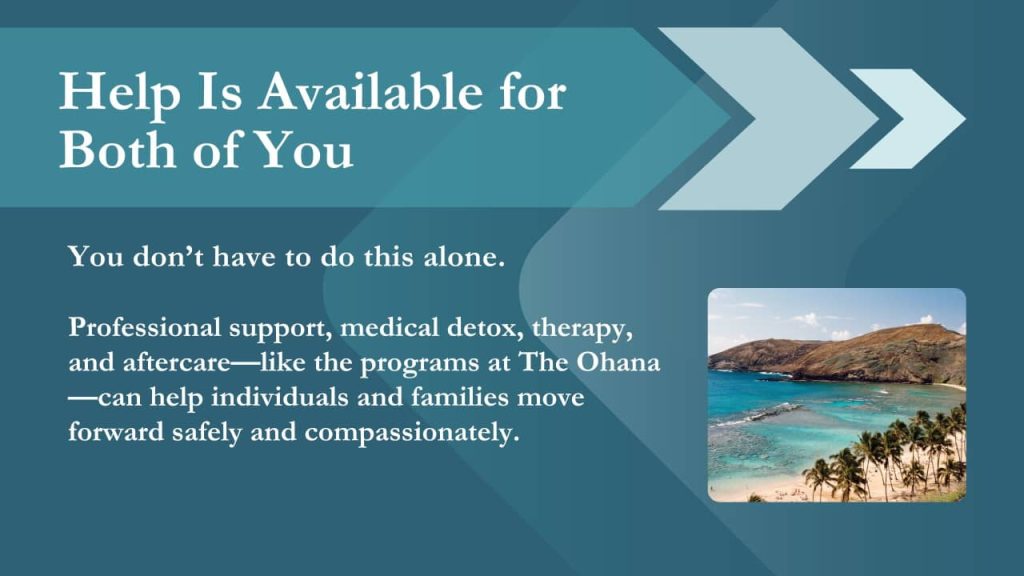
Treatment Options at The Ohana: Medical Detox, Residential, and Aftercare
When someone begins to accept that help may be needed — even tentatively — having supportive options matters. Some families find that a change of environment—such as exploring rehab in Hawaii—can make it easier to step out of daily triggers and focus fully on recovery.
At The Ohana, a whole-person recovery model includes:
- Medical detox: Safe symptom management, particularly for those physically dependent on alcohol
- Residential treatment: Structured environment fostering sustained sobriety
- Therapeutic modalities: Cognitive-behavioral, trauma-informed care, and peer support
- Holistic therapies: Yoga, meditation, nutrition, acupuncture — all supporting nervous system regulation and emotional integration
These approaches work together to address both the physical effects of alcohol dependence and the emotional/internal barriers — like denial — that keep someone stuck. Care is individualized, recognizing that recovery is not one size fits all.
A Final Word
Helping an alcoholic in denial is one of the hardest roles a loved one can face. You may feel powerless, angry, hopeful, and exhausted—sometimes all at once. Denial doesn’t mean someone doesn’t care; it often means they’re afraid.
Change rarely happens in one conversation. But clarity, boundaries, and support can create the conditions where change becomes possible.
If you or someone you love is struggling, The Ohana is here to help—when the time is right.