It’s one of the most common—and most complicated—questions people ask in recovery: can an alcoholic ever drink again?
Sometimes it comes from curiosity. Sometimes it comes from hope. And sometimes, it comes from a quiet thought that begins to surface after time has passed: maybe things would be different now.
However, the answer isn’t as simple as yes or no. It requires an honest look at how addiction affects the brain, what research tells us about relapse, and what tends to happen when people try to return to alcohol after a period of sobriety.
This article isn’t about judgment—it’s about clarity. Because understanding the risks can help people make decisions that support long-term health and recovery.
Can a Recovered or Recovering Alcoholic Ever Drink Again?
For people without a history of addiction, alcohol may remain something that can be used occasionally without major consequences. But for someone with alcohol use disorder, the relationship with alcohol is fundamentally different.
Recovery is not about willpower alone—it’s about how the brain has adapted to repeated alcohol use. These changes don’t simply disappear over time.
So while someone may be able to have a drink, the real concern is whether they can return to drinking without reigniting old patterns. For most people with a history of addiction, that risk remains significant—even after years of sobriety.
How Alcohol Use Disorder Changes the Brain
To understand why returning to drinking is so risky, it helps to understand what alcohol use disorder actually does to the brain.
The Neuroscience Behind Lasting Cravings
Alcohol affects the brain’s reward system, particularly dopamine pathways that reinforce behaviors associated with pleasure and relief. Over time, repeated alcohol use rewires these systems.
Instead of responding normally to everyday rewards, the brain begins to prioritize alcohol. This shift can change how a person experiences motivation, pleasure, and decision-making over time. As a result, several patterns tend to emerge:
- Strong cravings: Cravings can feel sudden and intense, even after a long period of sobriety. They are often triggered by stress, emotions, or environmental cues, and can create a powerful urge to drink that feels difficult to ignore at the moment.
- Reduced impulse control: Alcohol use disorder can weaken the brain’s ability to pause and think through decisions. This means someone may act more quickly on urges or justify choices they would have previously resisted, especially in emotionally charged situations.
- Difficulty experiencing pleasure without alcohol: Over time, the brain may become less responsive to natural rewards like social connection, hobbies, or accomplishments. Activities that once felt enjoyable can seem dull or unfulfilling, which can increase the temptation to return to alcohol as a way to feel something again.
Even after a period of sobriety, these neural pathways don’t fully reset. They may become quieter, but they can still be reactivated.
That’s why someone who has been sober for months or years can still experience sudden, intense urges in certain situations.
Why Time Away From Alcohol Doesn’t Reset the System
One of the most common assumptions is that enough time away from alcohol “resets” the brain.
Unfortunately, that’s not how addiction works.
Time can help the brain heal in many ways—improving emotional regulation, sleep, and overall functioning. But the underlying vulnerability to addiction often remains. Even after long periods of sobriety, the brain can quickly return to familiar patterns once alcohol is reintroduced.
Why Moderate Drinking Almost Never Works After Addiction
The idea of “controlled drinking” is appealing. Many people in recovery wonder whether they could eventually return to moderate alcohol use.
But research and clinical experience consistently show that this approach is rarely successful for individuals with a history of addiction.
What the Research Shows About Controlled Drinking Attempts
Studies on controlled drinking after alcohol dependence have found that most individuals eventually return to problematic patterns.
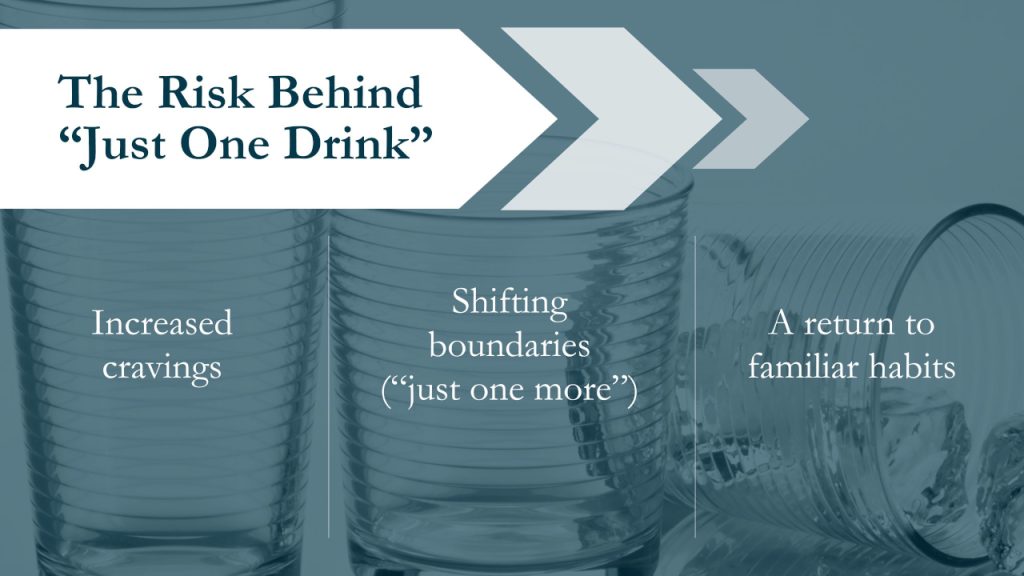
At first, it may seem manageable. Someone might have one drink and feel fine. But over time, old patterns tend to re-emerge:
- Drinking becomes more frequent
- Limits begin to shift
- Cravings increase
- Consequences return
This isn’t because someone lacks discipline—it’s because the brain’s reward system has already been conditioned.
Does One Drink Really Break Sobriety?
Another common question is: does one drink break sobriety?
Technically, definitions of sobriety can vary depending on personal goals or recovery programs. But from a clinical perspective, even one drink can be risky.
For many people, that first drink acts as a trigger. It can reactivate cravings and make it much harder to stop at one.
What starts as a single drink often doesn’t stay that way—not because someone failed, but because the brain is responding in a way it was conditioned to do.
Can a Recovering Drug Addict Drink Alcohol?
This question comes up often in recovery circles: can a recovering drug addict drink alcohol if alcohol wasn’t their primary substance?
Cross-Addiction and Why It’s So Common
Addiction doesn’t just attach to a specific substance—it affects the brain’s reward system more broadly. This means that switching from one substance to another doesn’t eliminate the underlying vulnerability.
This is known as cross-addiction.
Someone who has struggled with drugs may find that alcohol triggers similar patterns of use, even if alcohol wasn’t previously a problem.
What Tends to Happen When People Switch Substances
When people in recovery begin using a different substance, a few patterns are common:
- The new substance becomes a substitute coping mechanism
- Usage gradually increases over time
- Old behaviors and thought patterns return
- The original addiction may resurface
It makes sense to wonder, “can recovering drug addicts drink alcohol?” But the safer and more evidence-based answer is that it often carries similar risks.
Warning Signs You May Be Rationalizing a Return to Drinking
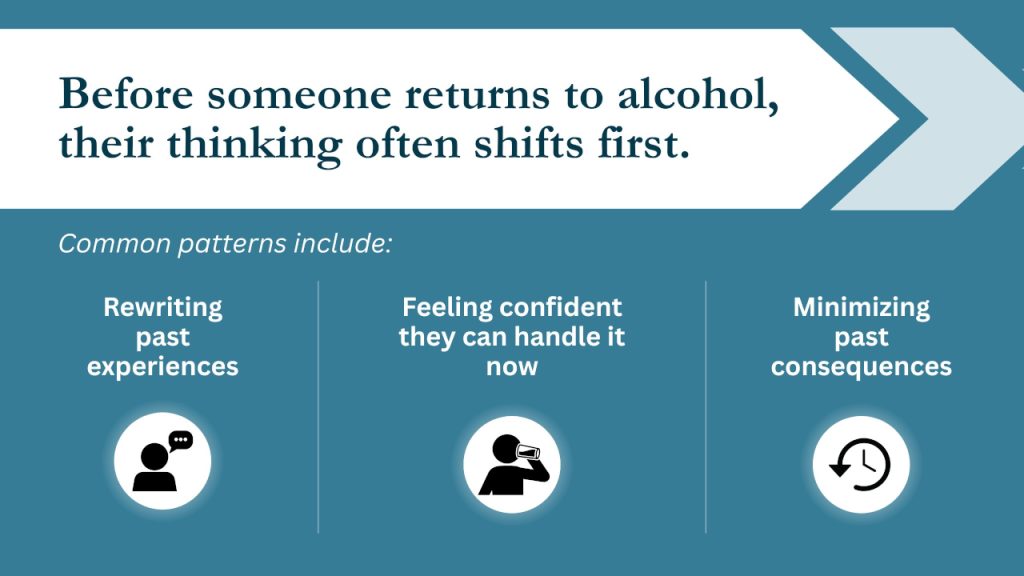
The desire to drink again doesn’t always appear as a clear decision. Often, it starts subtly—with thoughts that seem reasonable at first.
Some common signs of rationalization include:
- “I’ve been sober long enough—I deserve this.”
- “I wasn’t that bad compared to others.”
- “I can handle it differently this time.”
- “It’s just one drink.”
- “Things are going well—I don’t need to be as strict.”
These thoughts aren’t uncommon. In fact, they’re part of the recovery process for many people.
But they can also signal a shift in mindset that increases the risk of relapse.
Recognizing these patterns early can make it easier to step back and re-evaluate before taking action.
What to Do If You’re Struggling With the Urge to Drink Again
If you’re tempted to explore drinking again, it may be worth pausing and asking a deeper question: what’s driving this thought right now?
Often, the urge to drink is connected to something else—stress, loneliness, boredom, or even positive life changes that feel overwhelming.
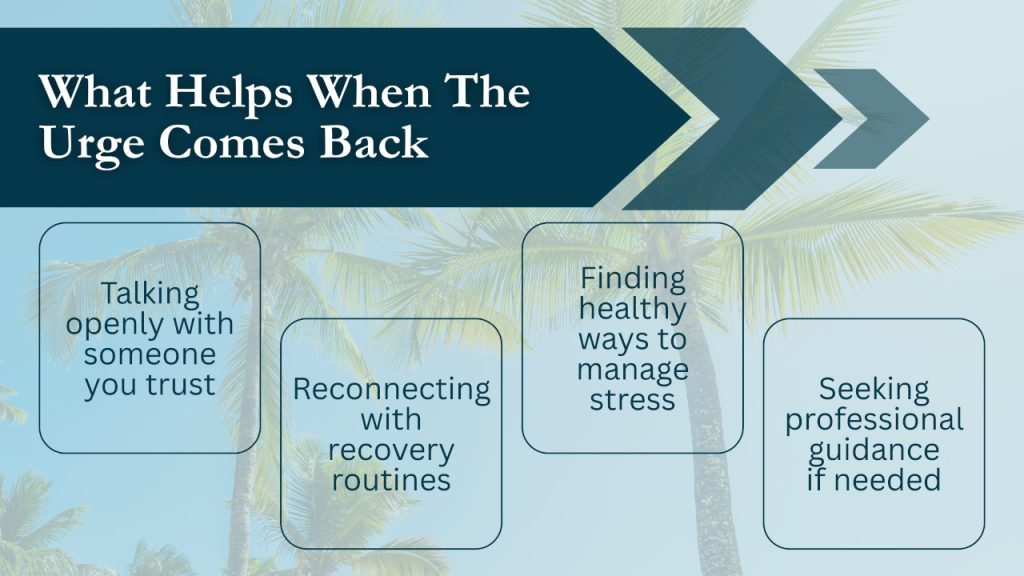
Here are a few steps that can help:
Talk to Someone You Trust
Whether it’s a sponsor, therapist, or trusted friend, talking openly about your thoughts can reduce their intensity. Keeping urges to yourself often gives them more power.
Reconnect With Your “Why”
Reflect on what led you to stop drinking in the first place. What has improved in your life since then? What would you risk losing?
Strengthen Your Support System
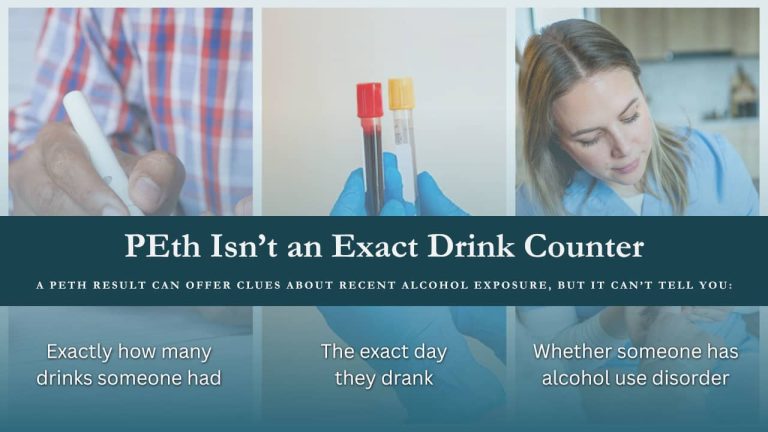
If you’ve drifted away from recovery routines, consider reconnecting. Meetings, therapy, and community support can provide structure and accountability. Some treatment and monitoring programs add an objective layer through PEth alcohol testing, which can show whether drinking has occurred in recent weeks.
Develop Alternative Coping Strategies
Learning to manage stress, emotions, and life transitions without alcohol is a key part of long-term recovery. When you feel the urge to drink, turn to a healthier activity. This might include mindfulness, exercise, creative outlets, or therapy.
How The Ohana Hawaii Supports Long-Term Recovery
At The Ohana Hawaii, a drug and alcohol rehab in Hawaii, recovery is approached with understanding. Rather than focusing only on abstinence, The Ohana helps clients understand the deeper patterns behind their relationship with substances. Through a combination of evidence-based therapies—including cognitive behavioral therapy (CBT), dialectical behavioral therapy (DBT), and trauma-informed care—clients gain insight into how their thoughts, emotions, and behaviors are connected.
In addition to clinical support, The Ohana offers a holistic approach that includes mindfulness practices, movement, and nature-based experiences. These elements help regulate the nervous system and support emotional balance.
This comprehensive approach allows individuals to build a recovery that feels sustainable—not restrictive.
Final Thoughts: Is It Worth the Risk?
So, can a recovered alcoholic ever drink again?
The more honest question might be: is it worth the risk?
For most people with a history of alcohol use disorder, the potential consequences outweigh the short-term appeal of drinking again. The brain changes associated with addiction don’t simply disappear, and even one drink can reopen pathways that are difficult to close.
Recovery is not about limitation—it’s about creating a life that no longer depends on alcohol to cope, celebrate, or feel at ease.
If the question is coming up for you, it may be an opportunity to check in, reconnect with support, and continue building something stronger.
At The Ohana Hawaii, that process is supported with compassion, understanding, and a focus on lasting, meaningful change.