Relapse is one of the most misunderstood parts of recovery. When it happens, people often feel discouraged, ashamed, or confused. Loved ones may feel frustrated or unsure how to respond. And one question tends to come up again and again: why do alcoholics relapse—even when things seem to be going well?
The truth is that relapse is not a single moment—it’s usually a process. It can unfold gradually, with subtle warning signs that are easy to miss, or it can happen more suddenly when stress, triggers, or emotional challenges build up.
Understanding the signs of alcohol relapse, the reasons it happens, and what to do next can make a meaningful difference. Whether you’re supporting a loved one or reflecting on your own experience, this guide offers clarity, compassion, and practical steps forward.
What Does It Mean To Relapse On Alcohol?
Before talking about why relapse happens, it’s important to define it.
So, what does it mean to relapse on alcohol? In simple terms, relapse is a return to alcohol use after a period of sobriety. But not all relapses look the same.
A Slip Vs. A Full Alcohol Relapse
There’s a difference between a slip and a full relapse.
A slip is often a one-time use followed by immediate recognition and a return to recovery efforts. A full relapse, on the other hand, involves a return to previous patterns of drinking and behavior.
Recognizing the difference matters because a slip doesn’t have to turn into something bigger. With support and awareness, many people can stop the cycle early.
Emotional, Mental, And Physical Relapse Explained
Relapse doesn’t begin with drinking—it usually starts much earlier.
Emotional Relapse Includes Things Like:
Bottling up emotions
When someone stops expressing how they feel or avoids talking about stress, resentment, sadness, or frustration, those emotions can begin building internally. Over time, suppressed emotions often create pressure that makes old coping mechanisms like drinking feel more tempting.
Isolation
Pulling away from supportive friends, family, sponsors, or recovery communities can be an early warning sign of struggle. Isolation often gives negative thoughts and cravings more room to grow without accountability or outside perspective.
Increased stress or irritability
When someone becomes more reactive, overwhelmed, short-tempered, or emotionally drained than usual, it may signal that they are struggling to regulate their emotions. If left unaddressed, ongoing stress can weaken coping skills and increase vulnerability to relapse.
Mental Relapse Is When Thoughts About Drinking Return:
Romanticizing past alcohol use
This happens when someone starts remembering only the “good” parts of drinking while minimizing or forgetting the consequences. They may think back on alcohol as something fun, freeing, or comforting rather than destructive.
Cravings
Cravings can be physical, emotional, or psychological urges to drink. Even if someone has no immediate plan to relapse, repeated cravings can wear down willpower over time if not managed properly.
Planning or justifying a drink
Mental relapse often includes internal bargaining, such as telling oneself, “Just one drink won’t hurt,” or “I deserve it after everything I’ve handled.” This stage is especially important to recognize because it often comes right before physical relapse.
Physical Relapse Is The Act Of Drinking Again
Physical relapse occurs when someone returns to alcohol use after a period of sobriety. While it may appear sudden from the outside, it is often the result of emotional and mental relapse patterns building over time.
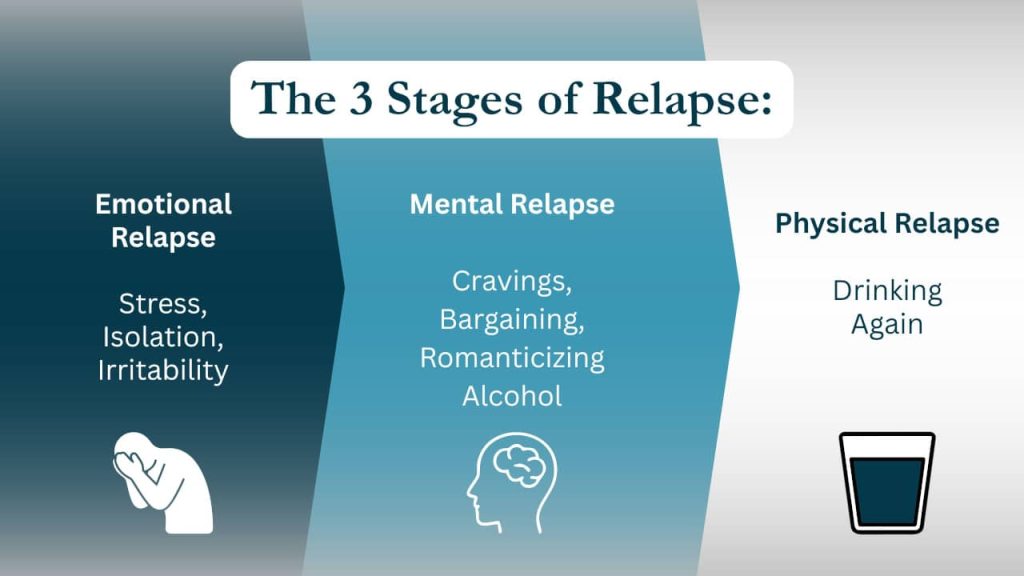
Understanding these stages also helps explain why recovering alcoholics rarely drink again without reopening older patterns — even after long stretches of sobriety.
Signs Of Alcohol Relapse And Early Warning Symptoms
Recognizing early signs of alcohol relapse can prevent a full return to drinking. Often, the warning signs appear in behavior, mood, and mindset before alcohol is involved.
Emotional And Behavioral Warning Signs To Watch For
Some of the most common signs of alcohol relapse include:
Withdrawal from support systems
When someone stops answering calls, attending meetings, or spending time with their support network, it may indicate they are beginning to disconnect from accountability. Recovery tends to weaken when connection and support decrease.
Increased stress or mood swings
Noticeable emotional instability, irritability, or frequent overwhelm can signal internal distress. Many people relapse when they feel emotionally dysregulated and lack healthy ways to manage those feelings.
Neglecting self-care routines
Changes in eating habits, hygiene, exercise, sleep, or daily responsibilities may suggest someone is struggling mentally or emotionally. When self-care begins slipping, emotional resilience often declines as well.
Skipping meetings or therapy sessions
Avoiding therapy, recovery meetings, or treatment appointments may indicate someone is disengaging from the recovery process. This can reflect denial, shame, or growing overconfidence.
Feeling overly confident about recovery
Sometimes relapse risk increases when someone starts believing they no longer need support or structure. Thoughts like “I’ve got this under control now” can lead people to loosen boundaries before they’re truly ready.
These signs may seem small, but together they can signal that someone is struggling.
Signs An Alcoholic Is Drinking Again
When someone has already relapsed, the signs may become more visible. Common indicators include:
Changes in behavior or personality
Someone may become more withdrawn, irritable, impulsive, or emotionally unpredictable. You may notice their attitude, energy, or communication style shifting in ways that feel familiar to their past drinking patterns.
Secrecy or defensiveness
Relapse often brings increased secrecy, lying, or defensive behavior when asked simple questions. Someone may become unusually guarded, angry, or evasive when their actions are questioned.
Missing responsibilities
A return to drinking may cause someone to miss work, neglect family obligations, or fall behind on commitments. Responsibilities that were once manageable may suddenly start slipping again.
Smelling like alcohol or hiding bottles
Physical signs such as smelling like alcohol, keeping mints or gum nearby constantly, or hiding bottles in unusual places can indicate active drinking. These behaviors often reflect shame and an attempt to conceal the relapse.
Sudden financial or relationship strain
Alcohol use often impacts finances and relationships quickly. Unexplained spending, borrowing money, frequent arguments, or emotional distance can all be signs that drinking has resumed.
Recognizing signs an alcoholic is drinking again can be difficult, especially when trust is involved. But paying attention to patterns, not just isolated moments, can provide clarity.
Why Do I Keep Relapsing On Alcohol?
Why do alcoholics relapse? The answer typically involves multiple factors.
Relapse is rarely about a lack of willpower. It’s usually the result of unmet needs, unresolved stress, or gaps in coping strategies.
Common Triggers, Stressors, And Gaps In Coping Skills
Triggers can be external or internal. Common ones include:
- Stress at work or home
- Relationship conflict
- Social situations involving alcohol
- Loneliness or isolation
- Emotional discomfort like anxiety or sadness
Without strong coping skills, these triggers can lead back to drinking.
Relapse often happens when someone hasn’t yet developed enough tools to manage life without alcohol. That’s why recovery is about more than abstinence—it’s about building new ways to cope. For many people, building those tools is far easier inside a structured environment, which is why a residential Hawaii rehab can be such a meaningful next step.
Why Do Addicts Relapse When Things Are Good?
One of the most confusing patterns is relapse during positive periods.
This can happen for several reasons:
- Reduced vigilance: When things feel stable, people may loosen routines that support recovery.
- Fear of success or change: Positive shifts can feel unfamiliar or overwhelming.
- Emotional numbness: Without alcohol, some people struggle to process even positive emotions.
- Overconfidence: Believing “I’m fine now” can lead to risky decisions.
Recovery requires ongoing awareness, even when life is going well.
Alcohol Relapse Rates And Statistics
Understanding relapse rates can help normalize the experience and reduce shame.
What Percentage Of Alcoholics Relapse?
Research suggests that 40–60% of people in recovery experience relapse at some point. These numbers may sound discouraging, but they are similar to relapse rates for other chronic conditions like diabetes or hypertension.
Relapse is common, but it is not failure.
Alcohol Relapse Rates In The First Year And After Rehab
The risk of relapse is highest in the first year after treatment. This is when individuals are adjusting to life without alcohol and building new habits.
Alcohol relapse rates in the first year are influenced by:
- Strength of support systems
- Access to ongoing care
- Stress levels and life changes
- Commitment to recovery practices
Relapse risk decreases over time, especially with continued support and skill-building.
What To Say To An Alcoholic Who Relapsed
When someone relapses, what you say matters. Words can either encourage healing or deepen shame.
What To Say When Someone Relapses
Helpful responses include:
- “I’m here for you.”
- “You’re not alone in this.”
- “This doesn’t erase the progress you’ve made.”
- “Let’s figure out what support you need right now.”
The goal is to support accountability without reinforcing shame.
What Not To Say After A Relapse
Certain responses can make the situation worse:
- “I knew this would happen.”
- “You’ve ruined everything.”
- “Why can’t you just stop?”
These statements increase guilt and defensiveness, which can push someone further into relapse.
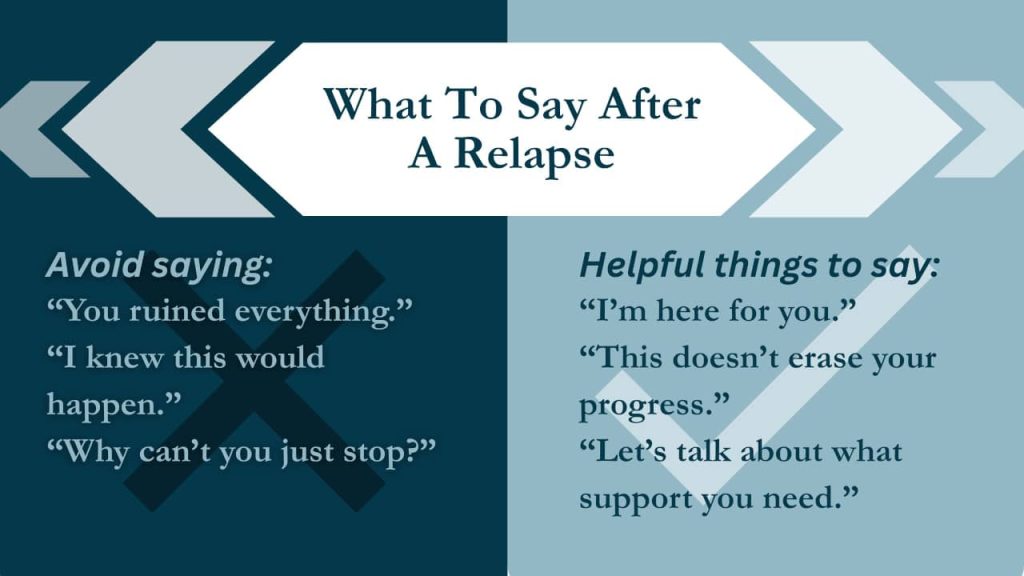
If you’re wondering what to say to someone who relapsed, focus on empathy, honesty, and encouragement.
What To Do When An Alcoholic Relapses
Knowing what to do when an alcoholic relapses can help you respond effectively instead of reacting emotionally.
Immediate Next Steps For Safety, Support, And Treatment
After a relapse, the priority is safety and stabilization.
Important steps include:
- Ensuring the person is physically safe
- Encouraging hydration and rest
- Reaching out to a sponsor, therapist, or support system
- Re-engaging with treatment if needed
Relapse is a signal—not an endpoint. It indicates that something in the recovery plan needs attention or adjustment.
How To Support Someone Without Enabling Them
Supporting someone through relapse requires balance.
You can:
- Offer encouragement
- Help them access treatment
- Stay emotionally present
But avoid:
- Covering up consequences
- Taking responsibility for their choices
- Ignoring your own boundaries
Healthy support promotes accountability and growth.

Moving Forward After Relapse
Relapse can feel like a setback—but it can also be a turning point.
Recovery is not a straight line. It’s about understanding what’s missing and what needs to change. It’s a process of learning, adjusting, and growing.
With the right support and tools, it’s possible to move beyond relapse and build a more stable, fulfilling life.
At The Ohana Hawaii, that journey is supported with compassion, structure, and a deep commitment to lasting recovery.