People use a lot of different words to describe drinking. Someone might call a friend a “drunk” after a night of heavy drinking, describe a relative as a “heavy drinker,” or wonder whether their own habits make them an alcoholic.
But these terms don’t all mean the same thing.
The biggest difference between a drunk and an alcoholic is that being drunk describes a temporary state of intoxication, while alcoholism generally refers to an ongoing pattern of problematic alcohol use. Even that distinction needs some context: “alcoholic” isn’t the diagnosis healthcare professionals typically use today. The clinical term is alcohol use disorder (AUD).
Understanding these differences can make it easier to recognize when drinking has moved beyond an occasional episode and become something that deserves attention. More importantly, it can shift the conversation away from labels and toward the question that matters most: What role is alcohol playing in your life?
What People Usually Mean by “a Drunk”
“Drunk” can simply mean intoxicated. In everyday conversation, however, people also use “a drunk” or “drunkard” to describe someone who drinks excessively or repeatedly becomes intoxicated.
Those labels can be misleading and stigmatizing. They describe a person by their drinking rather than telling us anything clinically meaningful about their relationship with alcohol.
Being Drunk Is an Episode, Not a Diagnosis
A person can become drunk without having alcohol use disorder.
For example, someone who rarely drinks could consume too much alcohol at a wedding and become significantly intoxicated. They might experience slurred speech, impaired coordination, poor judgment, nausea, or memory loss. That episode could be dangerous, but it doesn’t automatically mean they have an addiction.
At the same time, repeated intoxication shouldn’t simply be dismissed because someone doesn’t consider themselves an “alcoholic.” Frequently drinking enough to become impaired can expose a person to injuries, alcohol poisoning, unsafe decisions, and other health consequences.
Heavy and Binge Drinking Can Still Be Harmful
The distinction becomes especially important with binge and heavy drinking.
Someone may drink heavily on weekends while going several days without alcohol. Another person may drink regularly but rarely appear visibly drunk. Neither pattern can be accurately evaluated based only on whether the person “looks like a drunk.”
This is why modern approaches to alcohol problems focus less on stereotypes and more on drinking patterns, consequences, and a person’s ability to control their use.
What It Really Means to Be an Alcoholic
“Alcoholic” remains widely used in everyday conversation and within some recovery communities, including Alcoholics Anonymous. Clinically, however, healthcare professionals generally diagnose alcohol use disorder rather than alcoholism.
AUD can range from mild to severe. It is characterized by problematic alcohol use that leads to significant impairment or distress.
Signs can include:
- Drinking more than intended. A person may plan to have one or two drinks but repeatedly find themselves continuing well beyond that point.
- Trying unsuccessfully to cut back. They may make rules, take temporary breaks, or promise themselves they’ll drink less, only to return to the same pattern.
- Experiencing strong cravings. Thoughts about alcohol may become increasingly difficult to ignore or begin influencing plans and routines.
- Continuing despite consequences. Drinking may persist even after it contributes to health problems, arguments, work difficulties, or other unwanted outcomes.
- Giving up other activities. Hobbies, relationships, responsibilities, or interests can gradually become less important as alcohol takes up more space.
- Developing tolerance or withdrawal. Some people need increasing amounts of alcohol to achieve the same effect or experience symptoms when they reduce or stop drinking.
No single behavior determines whether someone has AUD. Diagnosis is based on a broader pattern of symptoms over time.
Can You Be an Alcoholic Without Drinking Often?
Yes. Frequency alone doesn’t determine whether someone has an alcohol problem.
Someone might drink every day without meeting criteria for severe AUD, while another person may drink less frequently but experience serious loss of control and consequences whenever they do.
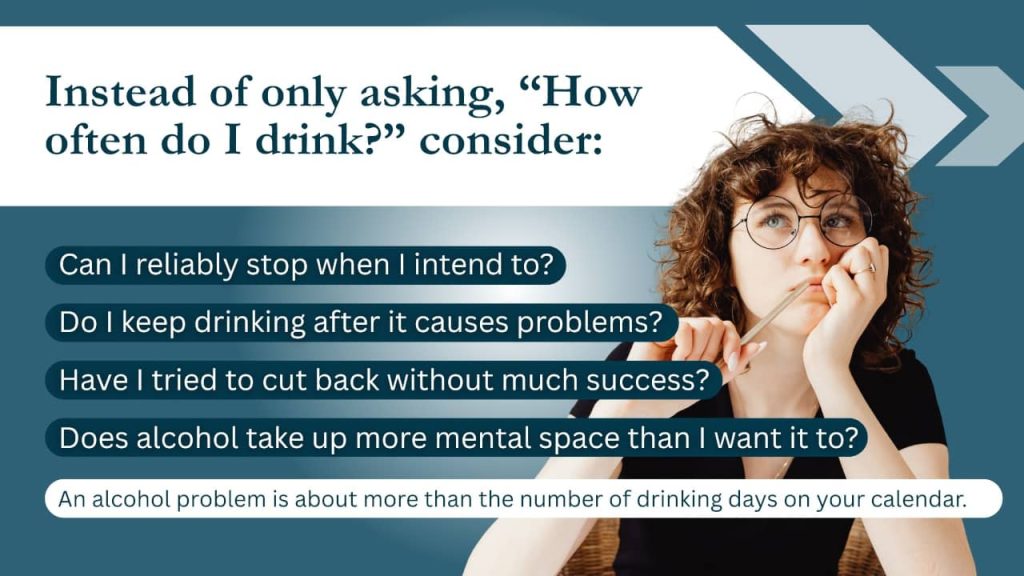
Instead of asking only how often someone drinks, it can be more useful to ask:
How difficult is it to stop? What happens once drinking begins? Is alcohol causing problems? Are attempts to change repeatedly unsuccessful?
Those questions tell us much more than a calendar does.
A Drunk vs. an Alcoholic: The Differences That Matter
When people compare a drunk vs. alcoholic, they’re often trying to determine how serious someone’s drinking has become.
The simplest distinction is this:
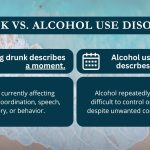
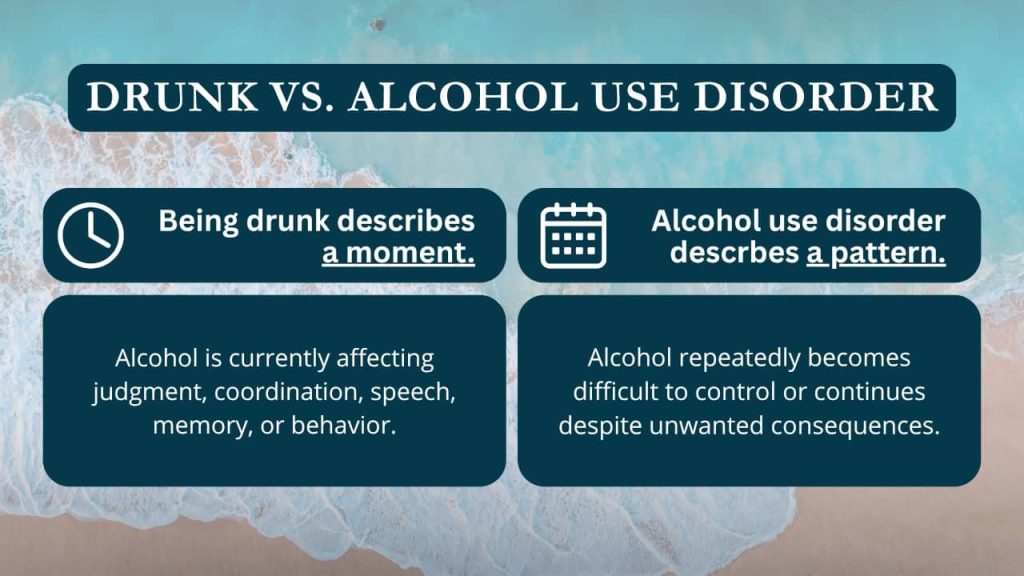
Intoxication describes what alcohol is doing to someone at a particular moment. Alcohol use disorder describes a recurring pattern and its impact over time.
Someone who is drunk may have consumed enough alcohol to impair their brain and body. That state eventually passes as alcohol is metabolized.
AUD involves something broader. A person may experience cravings, loss of control, continued drinking despite consequences, tolerance, withdrawal, or repeated difficulty changing their behavior.
Importantly, someone with AUD doesn’t have to appear intoxicated all the time—or even most of the time.
Some people maintain careers, relationships, and responsibilities while struggling significantly with alcohol behind the scenes. Others cycle between periods of abstinence and episodes of uncontrolled drinking.
That’s why the difference between a drunk and an alcoholic can’t reliably be determined by appearance alone.
Heavy Drinker vs. Alcoholic: Where Do the Lines Fall?
The distinction between heavy drinking and alcoholism can be confusing because these patterns can overlap.
Heavy drinking describes the amount or frequency of alcohol consumption. Alcohol use disorder describes a pattern involving impaired control, consequences, and other symptoms.
A person who drinks heavily is at increased risk of developing AUD, but the terms aren’t interchangeable.
Similarly, a problem drinker may recognize that alcohol is negatively affecting their life without meeting criteria for severe AUD.
The important point is that alcohol-related problems exist on a spectrum.
Signs of a Problem Drinker
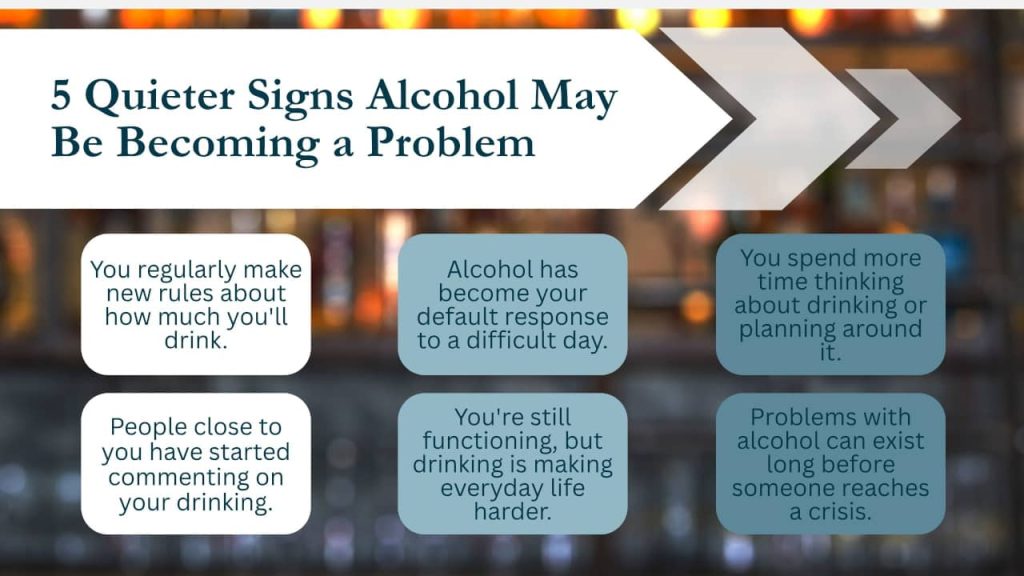
Problem drinking can show up long before someone’s life appears to be falling apart.
Potential warning signs include:
- Alcohol regularly leads to regret. A person may frequently wake up wishing they hadn’t said, done, or spent something while drinking.
- Limits are becoming harder to maintain. Rules like “only on weekends” or “two drinks maximum” may repeatedly change once drinking starts.
- Relationships are being affected. Loved ones may express concern, arguments may increasingly involve alcohol, or the person may become defensive when drinking is discussed.
- Alcohol has become an important coping strategy. Stress, anxiety, loneliness, anger, or boredom may automatically create the desire to drink.
- Responsibilities sometimes suffer. Hangovers, intoxication, or time spent drinking may begin interfering with work, parenting, school, finances, or commitments.
- Drinking continues despite concerns. Someone may know alcohol is affecting their physical or emotional health but still find changing the pattern surprisingly difficult.
These signs don’t require someone to adopt a particular label. They simply suggest that alcohol deserves a closer look.
Alcohol Abuse vs. Alcoholism in Clinical Terms
You may also see comparisons such as alcoholic vs. alcohol abuse or alcohol abuse vs. addiction online.
Some of that terminology comes from older diagnostic systems.
Historically, clinicians distinguished between “alcohol abuse” and “alcohol dependence.” Today, these categories have been combined into alcohol use disorder, which can be diagnosed as mild, moderate, or severe depending on the number of symptoms someone experiences.
This change better reflects the reality that drinking problems don’t fit neatly into two boxes.
Someone doesn’t suddenly cross a clear line from “problem drinker” to “alcoholic.” Patterns can develop gradually, and recognizing them earlier creates an opportunity to make changes before the consequences become more severe.
You Don’t Have to Look Like an “Alcoholic” to Need Support
One of the risks of labels is that they make comparison easy.
Someone may think:
I still have my job.
I don’t drink every morning.
I don’t drink as much as that person.
I’ve never gotten a DUI.
I’ve gone weeks without alcohol before.
Those things may all be true. They still don’t answer whether alcohol is creating problems.
A person doesn’t have to reach a particular level of severity before asking for help. If drinking feels difficult to control, creates consequences, takes up significant mental energy, or has become essential for coping with everyday life, those concerns are worth addressing.
When the Label Stops Mattering: Finding Help for Drinking
Ultimately, debating problem drinking vs. alcoholism can become a distraction.
You don’t need to decide whether you’re a “drunk,” a “problem drinker,” a “heavy drinker,” or an “alcoholic” before changing your relationship with alcohol.
A better starting point may be asking:
Is alcohol making my life harder than I want it to be?
If the answer is yes, support is available.
For some people, that means speaking with a physician or therapist, attending a recovery meeting, or taking an honest look at their drinking habits. For others, particularly those experiencing dependence or repeated unsuccessful attempts to stop, structured residential addiction treatment may be appropriate.
And if someone has developed physical dependence on alcohol, suddenly stopping without medical guidance can be dangerous. Alcohol withdrawal can become severe and, in some circumstances, life-threatening. That is why a medically supervised detox is often the first step in treatment.
Finding Individualized Alcohol Treatment at The Ohana Hawaii
At our alcohol rehab in Hawaii, treatment isn’t built around forcing someone into a label. It’s built around understanding the individual.
Each client’s needs, history, mental health, substance use patterns, relationships, trauma, and goals can influence what effective recovery looks like.
The Ohana combines evidence-based approaches such as Cognitive Behavioral Therapy (CBT), Dialectical Behavioral Therapy (DBT), psychodynamic therapy, trauma-focused work, individual sessions, and group therapy. Family sessions are also available when appropriate.
Treatment also extends beyond the traditional therapy room. Holistic approaches such as mindfulness, yoga, meditation, ecopsychology, art therapy, massage, and sound healing can help clients develop new ways to manage stress, connect with themselves, and tolerate difficult emotions without automatically turning to alcohol.
That whole-person approach matters because alcohol use rarely exists in isolation. Drinking may have become connected to stress, anxiety, trauma, relationships, loneliness, self-worth, or simply years of deeply established habits.
Recovery creates an opportunity to understand those connections and build something healthier in their place.