Having a drink at work can mean very different things depending on the situation. There is a big difference between having a glass of champagne at a company celebration, ordering a beer during a business lunch, and secretly drinking during a shift.
So, is it illegal to drink at work?
In many jobs, drinking alcohol at work is not automatically a crime. However, federal regulations, state laws, licensing requirements, safety rules, and company policies can all affect what is allowed. An employee can also face serious workplace consequences for drinking even when no criminal law has been broken.
And sometimes, the more important question isn’t whether that drink was technically allowed. It’s why drinking has started happening during the workday at all.
When Drinking on the Job Is Actually Against the Law
There is no single federal law that makes it a crime for every adult employee to consume alcohol while working. The rules depend heavily on the type of work being performed and where it takes place.
Certain employees are subject to much stricter requirements because impairment could put coworkers, customers, passengers, or the public at risk.
Safety-Sensitive and Federally Regulated Jobs
For people working in safety-sensitive positions, alcohol rules can go far beyond an employer’s employee handbook.
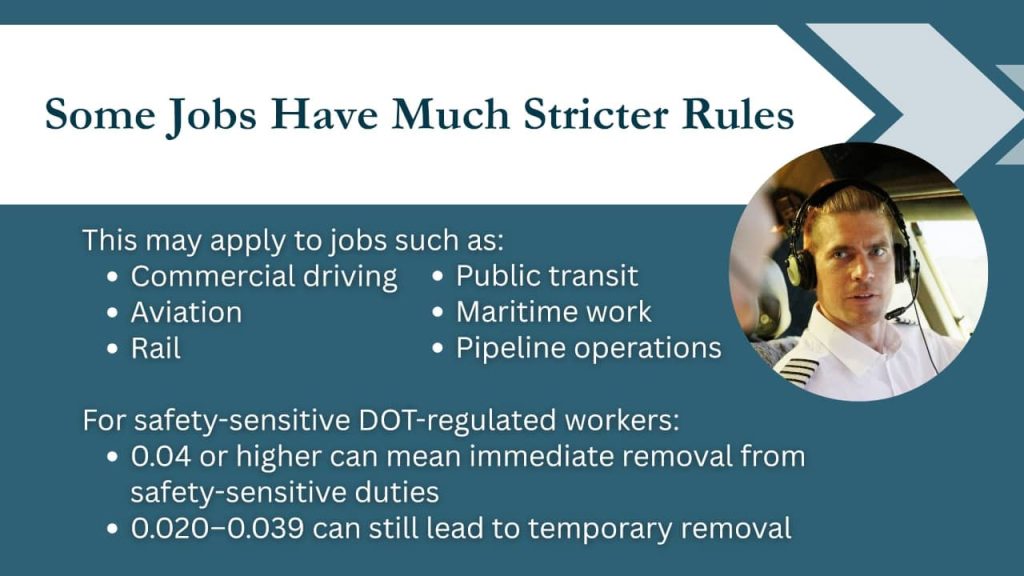
The U.S. Department of Transportation (DOT), for example, has alcohol-testing requirements covering certain safety-sensitive transportation workers. Under DOT regulations, an employee with an alcohol concentration of 0.04 or higher must immediately be removed from safety-sensitive functions. Even a result between 0.020 and 0.039 requires temporary removal from those duties under applicable DOT rules.
Depending on the industry, federally regulated positions can include certain:
- Commercial drivers
- Pilots and aviation employees
- Railroad workers
- Transit employees
- Pipeline workers
- Maritime employees
Other occupations may be governed by additional federal, state, licensing, or professional requirements.
The takeaway is simple: if your work involves transportation, machinery, public safety, healthcare, or another safety-sensitive responsibility, never assume that the rules applying to an ordinary office job apply to you.
Bartenders, Servers, and State Liquor Laws
Working around alcohol doesn’t necessarily mean employees are allowed to consume it.
Bartenders, servers, brewery employees, winery staff, and other hospitality workers may be subject to state or local alcohol laws in addition to their employer’s rules. Depending on the jurisdiction and license involved, there may be restrictions surrounding employee drinking, intoxication, or alcohol consumption while working.
This is one area where location matters significantly. A practice that is permitted in one state may be restricted in another.
If you work in an alcohol-serving establishment, check your state’s alcohol beverage control agency and your employer’s policy rather than relying on what you’ve seen coworkers do.
Laws That Still Apply on the Clock: Public Intoxication and Driving
Even when consuming alcohol at work itself isn’t illegal, alcohol doesn’t create an exception to other laws.
For example, driving while impaired remains illegal regardless of whether someone was drinking at a work event, client dinner, office happy hour, or during a shift. State and local laws concerning public intoxication or disorderly behavior may also apply depending on the circumstances.
That means a company allowing alcohol at an event doesn’t make everything that happens afterward legally protected or safe.
Drinking at Work Is Rarely a Crime, but It Can Still Cost You Your Job
One of the most important distinctions is between illegal conduct and conduct your employer prohibits.
Something does not need to be a crime for an employer to establish a rule against it.
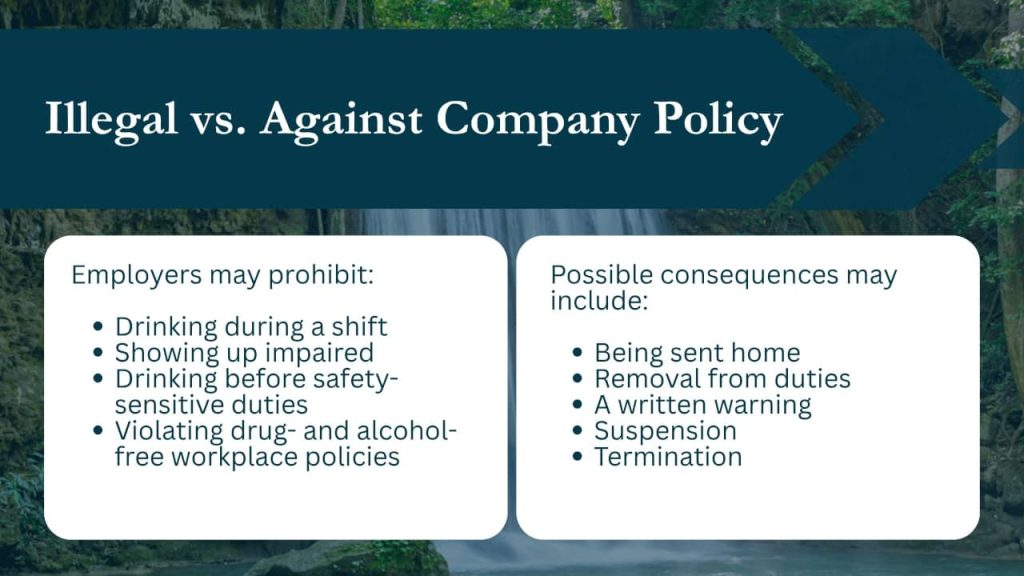
Employers can create drug- and alcohol-free workplace policies that establish when alcohol is prohibited, whether testing may occur, what happens when an employee appears impaired, and what consequences follow a violation. SAMHSA describes a written drug-free workplace policy as a cornerstone of an effective workplace program.
Depending on the employer and circumstances, violating the policy could result in:
- Being sent home
- Removal from certain duties
- A written warning
- Required evaluation or treatment
- Suspension
- Termination
An employer may also treat a champagne toast at an approved company party very differently from drinking from a hidden bottle during a normal shift.
Context matters.
How the Rules Change From State to State
Workplace alcohol laws are not identical throughout the United States.
States can have their own requirements concerning alcohol testing, off-duty conduct, workplace safety, workers’ compensation, licensed occupations, and the sale or consumption of alcohol.
Local ordinances can add another layer.
That’s why broad questions about whether drinking on the job is illegal don’t always have one universal answer.
If a workplace incident has already happened and you’re concerned about legal or employment consequences, look at the rules for your specific state and industry. An HR professional, union representative, licensing board, or employment attorney may also be able to clarify how those rules apply to your situation.
Company Policy Is Where Most Workplace Drinking Rules Live
For many employees, the most relevant answer isn’t found in criminal law. It’s found in the employee handbook.
SAMHSA recommends that workplace substance-use policies clearly explain who is covered, which substances are prohibited, whether testing is involved, available assistance, and the penalties for violations.
If you’re unsure what your employer permits, look for policies concerning:
- Alcohol and substance use
- Fitness for duty
- Drug-free workplaces
- Workplace conduct
- Company events
- Drug and alcohol testing
Don’t assume that a workplace’s informal culture overrides its written rules.
Lunch Drinks, Happy Hours, and the One-Drink Question
Workplace alcohol rules can become particularly confusing when alcohol is socially accepted in some settings.
Maybe your manager orders wine at a client lunch. Your company stocks beer for Friday afternoons. There may be an open bar at the holiday party.
Permission in one context doesn’t necessarily translate to permission in another.
A company might allow alcohol at a designated event while prohibiting employees from drinking during ordinary working hours. Some employers may allow a drink during lunch, while others maintain a completely alcohol-free workplace.
The safest answer is the least exciting one: check the policy that applies to your workplace.
Can You Be Fired for Drinking on the Job?
Potentially, yes.
The Americans with Disabilities Act (ADA) can provide protections to some people with alcohol use disorder who meet the law’s definition of disability. But those protections do not give an employee permission to drink at work or ignore workplace conduct standards.
The Equal Employment Opportunity Commission explains that employers can hold employees with alcoholism to the same performance and conduct standards as other employees, including uniformly applied rules prohibiting alcohol use on the job.
In other words, having alcohol use disorder and violating a workplace alcohol policy are two separate issues.
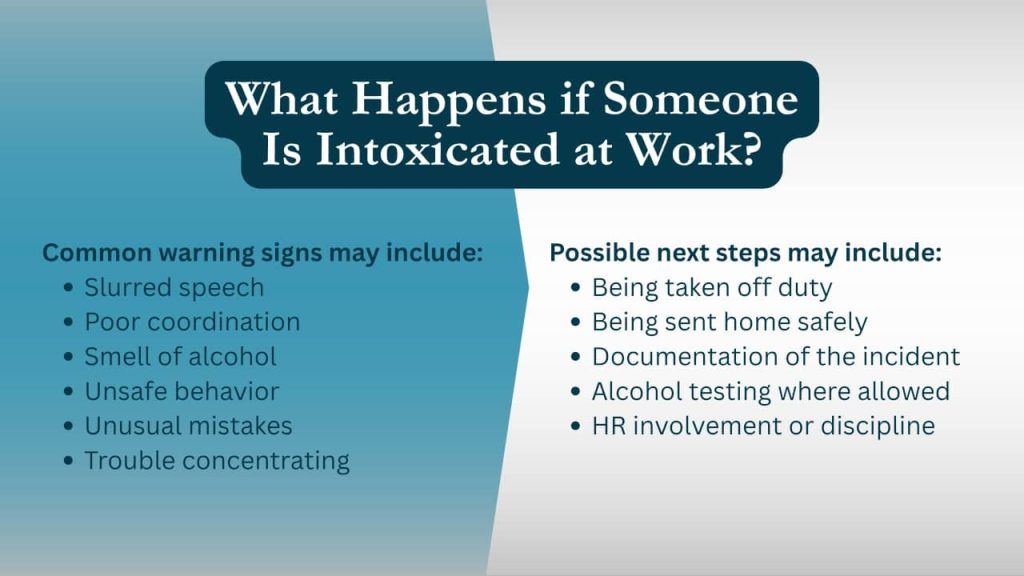
Being Drunk or Intoxicated at Work: What Usually Happens Next
Showing up intoxicated at work can raise immediate safety and performance concerns even when no crime has occurred.
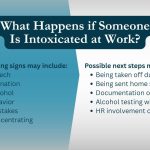
An employer may notice changes such as:
- Slurred speech or poor coordination
- The smell of alcohol
- Uncharacteristic mistakes
- Difficulty concentrating
- Unsafe behavior
- Significant mood or behavioral changes
What happens next depends on the workplace.
An employee might be removed from duty, sent home safely, documented for a policy violation, asked to undergo testing where permitted, referred to HR, or disciplined.
In a safety-sensitive job, the response may be dictated by regulation rather than managerial discretion.
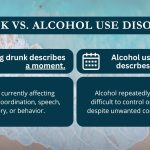
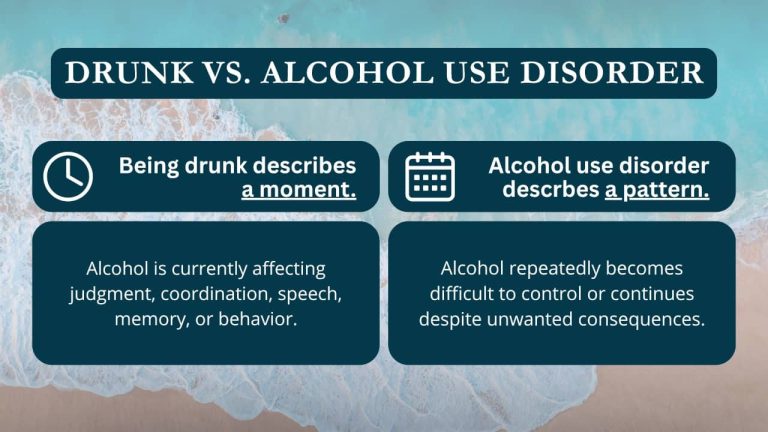
One incident also doesn’t automatically tell you whether someone has alcohol use disorder. But arriving at work intoxicated, repeatedly drinking during shifts, or struggling to get through the workday without alcohol are signs of an unhealthy relationship with alcohol worth taking seriously.
Your Rights If You Need Help: FMLA, ADA, and Employee Assistance Programs
Fear of losing a job can prevent people from asking for help with alcohol. But depending on the circumstances, employees may have resources and legal protections available.
FMLA and Treatment for Alcohol Use
Under the Family and Medical Leave Act (FMLA), eligible employees may be able to take protected leave for substance use treatment when the condition and treatment meet FMLA requirements.
There is an important distinction: FMLA may protect qualifying time away for treatment, but it does not protect absences caused simply by drinking or substance use. The Department of Labor also notes that an employer may still enforce an established, nondiscriminatory substance-use policy.
ADA Protections
Alcohol use disorder may qualify as a disability under the ADA in certain circumstances. Employers may sometimes need to provide reasonable accommodations to qualified employees.
At the same time, an employer can still require employees to meet ordinary performance and conduct expectations. ADA protections aren’t a free pass to be intoxicated at work.
Employee Assistance Programs
If your employer has an Employee Assistance Program (EAP), it can be a valuable first step.
EAPs may offer confidential assessments, short-term counseling, referrals to treatment, and support for stress, mental health, substance use, and other concerns affecting work.
If you’re worried about your drinking, it may be worth learning what resources are available before a workplace crisis forces the issue.
When Drinking at Work Points to Something Bigger
A single workplace toast is very different from needing alcohol to make it through a Tuesday afternoon. For some people, it starts with drinking after work to unwind and only later spills into the workday.
If drinking has moved into working hours, it can be useful to look beyond the question of whether you’ll get caught.
Signs the Drinking Isn’t Just About the Job
Consider whether you’ve started:
- Hiding alcohol at work or in your car
- Drinking before your shift begins
- Using lunch breaks as opportunities to drink
- Keeping alcohol in a coffee cup, water bottle, or other container
- Drinking to manage anxiety before meetings or interactions
- Feeling shaky, anxious, irritable, or physically unwell when you can’t drink
- Promising yourself you won’t drink at work and doing it anyway
- Missing deadlines, meetings, or responsibilities because of alcohol
- Worrying that coworkers have noticed
Work stress can absolutely contribute to unhealthy coping. Long hours, burnout, difficult workplace dynamics, trauma exposure, and high-pressure jobs can all take a toll. SAMHSA notes that long or irregular hours and emotionally or physically demanding work can be relevant risk factors for workers dealing with mental health or substance-use concerns.
But if alcohol has become necessary to tolerate the workday, changing jobs or reducing stress may not be enough on its own. The relationship with alcohol deserves attention too.
Getting Help Without Losing Your Career
For someone worried about their career, seeking treatment can feel frightening.
But getting support doesn’t necessarily mean abandoning your professional life. Some programs are designed with this in mind: executive rehab for professionals can make room for essential work responsibilities during treatment when it’s clinically appropriate.
Depending on your situation, options might include an EAP, outpatient treatment, medical care, protected leave when eligible, or a more structured treatment program. The right level of care depends on the severity of the alcohol use, withdrawal risk, mental and physical health, home environment, and other individual circumstances.
If you’ve been drinking heavily or regularly, don’t abruptly stop solely because you’re afraid of workplace consequences without considering withdrawal risk. Alcohol withdrawal can become medically serious, and a healthcare professional can help determine whether medically supervised detox is appropriate.
Finding Support for Alcohol Use at The Ohana Hawaii
At The Ohana Hawaii, residential treatment isn’t focused simply on getting someone away from alcohol. The goal is to understand what made alcohol feel necessary in the first place and build healthier ways to cope with stress, emotions, relationships, and everyday life.
You don’t have to wait for a termination, accident, or another serious consequence to take that seriously. Getting help earlier can give you the opportunity to address alcohol use while also protecting the life and career you’ve worked hard to build. When you’re ready, our alcohol rehab in Hawaii can help you take that first step.