
If you’ve ever loved someone struggling with addiction, you may have asked yourself a difficult question: why do addicts play the victim?
You might hear statements like:
- “Everyone is against me.”
- “You don’t understand what I’ve been through.”
- “This isn’t my fault.”
Over time, these patterns can become frustrating, confusing, and emotionally exhausting. It can feel like no matter what you say or do, the conversation turns into blame, defensiveness, or self-pity.
But the truth is more nuanced than it appears on the surface.
What often looks like manipulation is frequently rooted in deeper psychological patterns—shame, trauma, fear, or an inability to cope. Understanding addiction victim mentality doesn’t excuse harmful behavior, but it does help you respond in a way that protects your own well-being while supporting the possibility of real change.
What Playing The Victim Really Means In Addiction
When people talk about someone “playing the victim,” they’re usually describing a pattern where a person consistently sees themselves as powerless, mistreated, or unfairly targeted—even when their own behavior is contributing to the situation.
In addiction, this mindset often becomes a way to avoid accountability.
Someone with an alcoholic victim mentality may genuinely feel misunderstood or attacked, even when others are expressing concern. Their perspective is shaped by emotional distress, distorted thinking, and the effects of substance use.
The Difference Between Real Victimization And A Victim Mentality
It’s important to pause here, because this distinction matters.
Many people struggling with addiction have experienced real trauma, neglect, or harm. In those cases, they are victims of circumstances that shaped their lives. That pain is real and deserves compassion.
However, victim mentality is different. It’s a pattern of thinking where someone:
- Avoids responsibility for their actions
- Blames others for ongoing problems
- Feels stuck or powerless to change
- Interprets feedback as personal attack
These patterns often develop as a coping mechanism—but over time, they can keep someone stuck.
Why Do Addicts And Alcoholics Play The Victim?
So, why do addicts always play the victim? The answer isn’t simple, but there are several common psychological drivers.
Shame And Self-Protection
At the core of addiction is often deep shame. Admitting responsibility can feel overwhelming, especially if someone already feels like they’ve failed themselves or others.
Blaming external circumstances helps protect against that painful internal narrative. If everything is someone else’s fault, the person doesn’t have to face the full weight of their actions.
Loss Of Control And Fear
Addiction often creates a sense of lost control. Rather than acknowledging that reality, some people shift into a mindset where they feel life is happening to them rather than something they can influence.
This can make the world feel safer, even if it isn’t accurate.
Cognitive Distortions
Substance use affects how the brain processes reality. Over time, thinking patterns can become skewed. A neutral comment might feel like criticism. Concern might feel like judgment.
Those struggling with addiction face emotional and neurological changes which can shift their perceptions of reality.
Avoidance Of Consequences
Victim mentality can also serve a more practical purpose: avoiding consequences.
If someone believes (or convinces others) that they are not responsible, they may avoid difficult conversations, accountability, or change.
Signs Of An Victim Mentality in Addiction
Recognizing the signs of victim mentality in addiction can help you understand what’s happening—and what’s not.
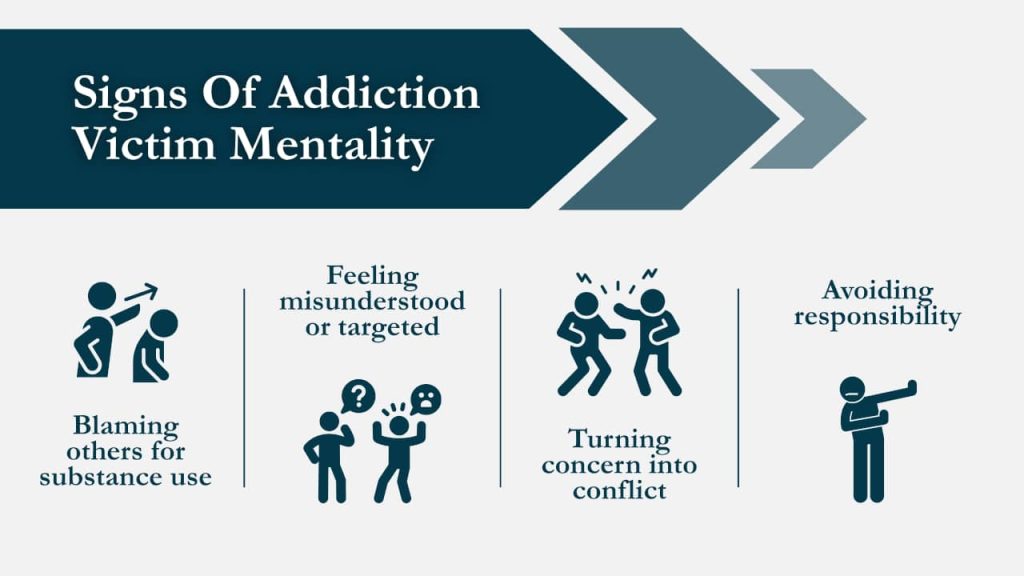
Common patterns include:
- Blaming others for their drinking or drug use
“I wouldn’t drink if you didn’t stress me out.” - Minimizing personal responsibility
“It’s not that bad. Everyone else does it.” - Turning concern into conflict
When you express worry, they respond with anger or defensiveness. - Feeling misunderstood or targeted
They may frequently say that no one understands them or that others are unfair. - Avoiding change
Solutions are dismissed, delayed, or redirected.
These behaviors don’t always come from a place of intentional manipulation. Often, they reflect an inability to process difficult emotions in a healthier way.
Are Drug Users Victims Or Manipulative?
A common and complicated question is: are drug users victims, or are they being manipulative?
The honest answer is: sometimes both things can be true at once.
Many people struggling with addiction have experienced trauma, neglect, or mental health challenges. In that sense, they may be victims of circumstances that contributed to their substance use.
At the same time, addiction can lead to behaviors that appear manipulative—such as blaming others, avoiding responsibility, or distorting reality.
These behaviors are often survival strategies rather than intentional harm. But that doesn’t mean they’re harmless.
Understanding this distinction can help you respond with empathy without losing your boundaries.
How Victim Mentality Hurts Recovery
While victim mentality may protect someone emotionally in the short term, it becomes a major barrier to recovery.
Recovery requires a shift from:
- “This is happening to me”
to - “I have a role in what’s happening, and I can change it.”
When someone remains stuck in alcoholic victim mentality, they may:
- Resist treatment or support
- Avoid accountability
- Struggle to learn from consequences
- Stay stuck in repeated cycles
Without some level of personal ownership, lasting change becomes very difficult.
This is why treatment programs focus not just on stopping substance use, but on reshaping how someone understands themselves and their choices.
How To Respond If A Loved One Always Plays The Victim
If you’re dealing with someone who consistently shifts into victim mentality, it can be exhausting. You may feel blamed, misunderstood, or unsure how to help.
Here are a few grounded ways to respond:
Stay Calm And Don’t Engage In Blame Cycles
When someone is in a victim mindset, arguing facts rarely helps. Staying calm and not reacting emotionally can prevent escalation.
Set Clear Boundaries
Boundaries protect your well-being. This might look like:
- Not engaging in conversations that become accusatory
- Stepping away when interactions feel unhealthy
- Being clear about what behavior you will and won’t accept
Validate Feelings Without Reinforcing The Narrative
You can acknowledge emotions without agreeing with distorted thinking.
For example:
“I hear that you’re feeling overwhelmed” is different from
“You’re right, this is everyone else’s fault.”
Encourage Professional Support
Victim mentality often requires deeper work that can’t be resolved through conversations alone. Therapy and structured treatment can help address the underlying issues.
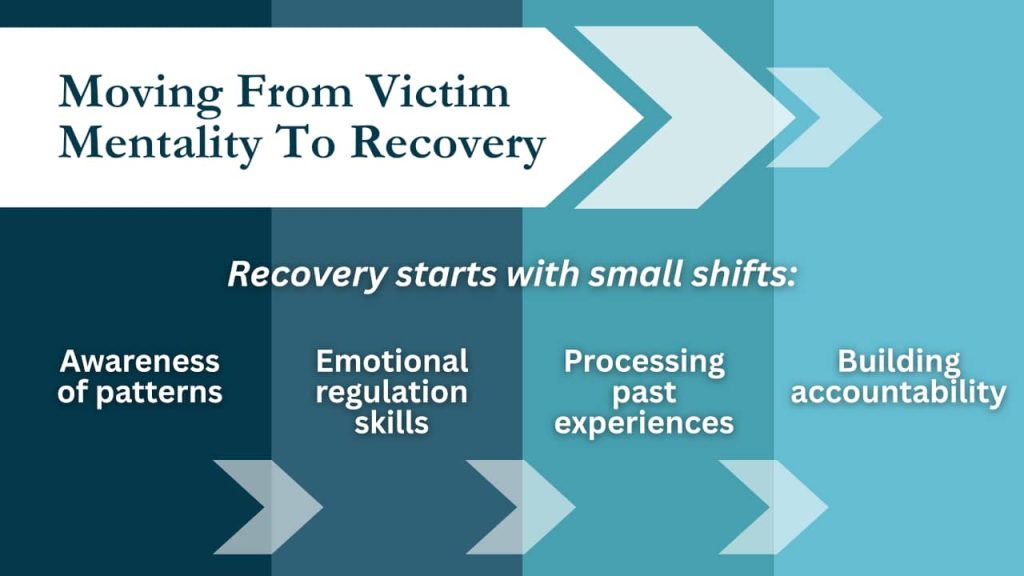
How Someone Can Move From Victim Mentality To Recovery
Shifting out of the victim mentality isn’t about blame—it’s about empowerment.
Recovery begins when someone starts to see that they have influence over their choices, even if they can’t control everything around them.
Building Awareness
The first step is recognizing patterns. Understanding how thoughts, emotions, and behaviors connect helps create space for change.
Developing Emotional Regulation Skills
Learning how to tolerate discomfort without escaping into substances is key. This includes managing stress, frustration, and shame in healthier ways.
Processing Underlying Trauma
For many people, addiction and victim mentality are tied to past experiences. Addressing those roots allows for deeper healing.
Reframing Identity
Moving from “I’m a victim” to “I’m someone capable of change” is a powerful shift. It doesn’t erase past pain—it redefines what’s possible moving forward.
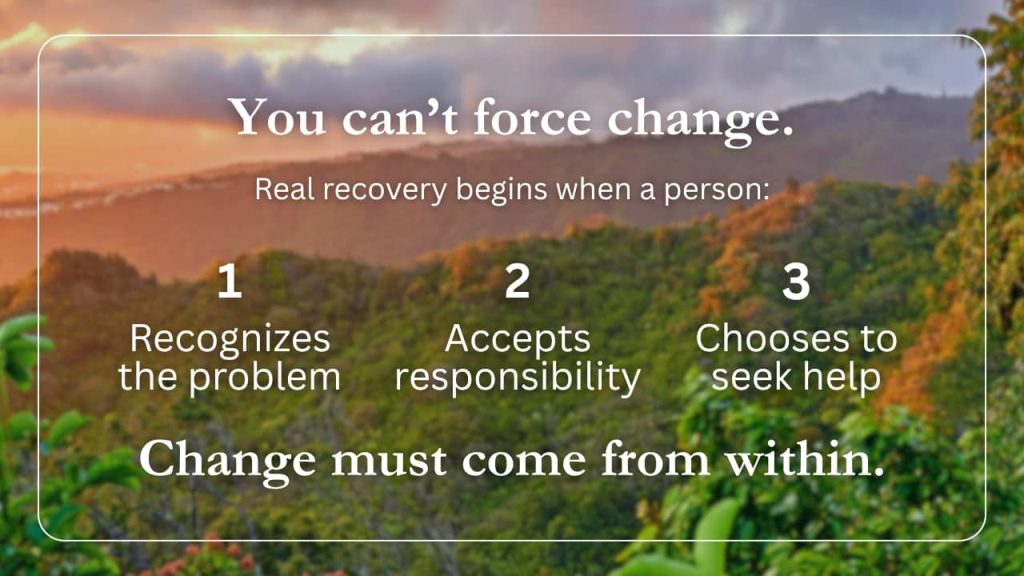
You Can’t Force Change—But You Can Encourage It
One of the hardest truths for loved ones to accept is this: you cannot force someone out of addiction or out of a victim mentality.
No matter how much you care, how clearly you explain the consequences, or how much support you offer, real change only happens when the person themselves is ready to take responsibility and choose something different.
This can feel incredibly frustrating—especially when you see the impact addiction is having on their life and the people around them. But trying to push, convince, or control often leads to more resistance, not less.
Why Change Has To Come From Within
Addiction is deeply tied to internal motivation. For someone to move out of addiction victim mentality, they have to begin seeing themselves as capable of change—not just as someone being acted upon by life.
When change is externally forced, it often doesn’t stick. But when it comes from within—even in small steps—it becomes far more sustainable.
That shift might start with something as simple as:
- Recognizing a pattern
- Feeling the impact of consequences
- Becoming open to help
What You Can Do Instead
While you can’t force change, you are not powerless. You can:
- Model healthy boundaries that protect your well-being
- Offer support without enabling harmful behavior
- Encourage treatment or professional help when appropriate
- Stay consistent in your communication and expectations
These actions create an environment where change is possible—without trying to control the outcome.
Letting Go Of Responsibility For Their Choices
One of the most important (and often most difficult) shifts for loved ones is letting go of the belief that it’s their job to fix the situation.
You didn’t cause the addiction, and you can’t control it.
How The Ohana Hawaii Supports This Transformation
At The Ohana, our approach to addiction treatment in Hawaii isn’t about labeling or judging—it’s about understanding and growth. The Ohana’s approach recognizes that patterns like addiction victim mentality don’t appear out of nowhere. They develop over time, often as ways to cope with pain, trauma, or overwhelming life experiences.
Through a combination of evidence-based therapies and holistic care, clients are supported in moving from reactive patterns to intentional living.
Treatment includes:
- Cognitive Behavioral Therapy (CBT) to reshape thought patterns and beliefs
- Dialectical Behavioral Therapy (DBT) to build emotional regulation and distress tolerance
- Trauma-informed therapy to safely process past experiences
- Group therapy, creating connection and accountability
- Holistic practices like mindfulness, yoga, and nature-based experiences
In this environment, clients learn to understand why they think and behave the way they do—and more importantly, how to change those patterns.
Rather than reinforcing blame or shame, the focus is on building self-awareness, responsibility, and resilience.
The Bottom Line
So, why do addicts play the victim?
Because it often feels safer than facing shame, responsibility, or uncertainty.
But staying in that mindset keeps people stuck.
Understanding why addicts always play the victim doesn’t mean accepting harmful behavior—but it does open the door to more effective, compassionate responses.
Whether you’re supporting a loved one or reflecting on your own patterns, change is possible. With the right support, people can move from feeling powerless to taking meaningful steps toward recovery.
At The Ohana Hawaii, that shift is supported every step of the way—helping individuals move beyond survival patterns and into a life that feels grounded, connected, and genuinely their own.