Alcohol testing has changed considerably over the years. While breath and urine tests can be useful for identifying relatively recent alcohol exposure, newer biomarkers can provide information about drinking that occurred further in the past. One of these biomarkers is phosphatidylethanol, better known as PEth.
A PEth alcohol test is increasingly used in medical, treatment, legal, and monitoring settings because PEth only forms in the presence of ethanol. Unlike a breathalyzer, however, the test isn’t designed to tell whether someone is intoxicated right now. Instead, it can provide evidence of alcohol exposure over a longer period.
That raises an understandable question: Can a PEth test detect occasional drinking?
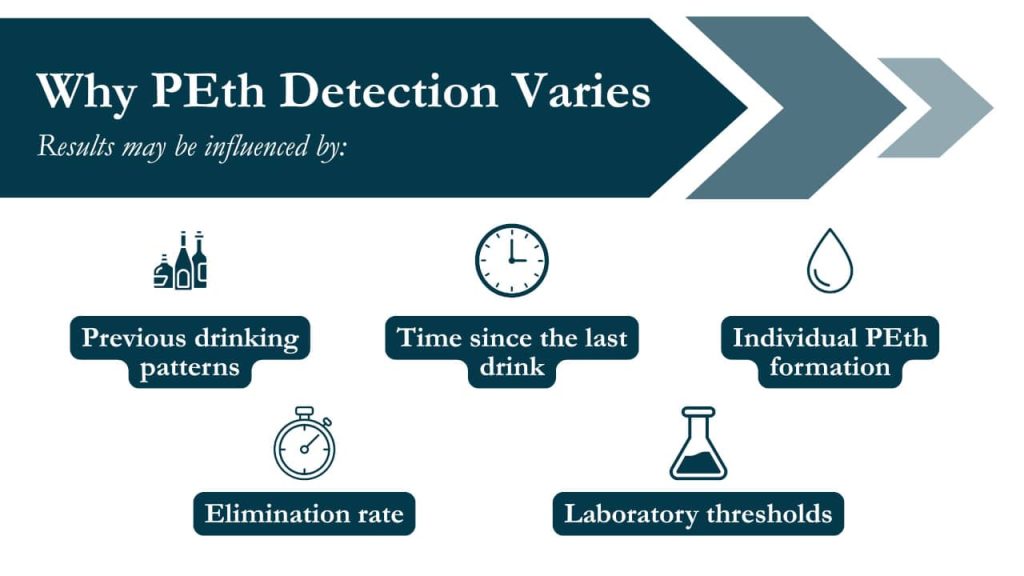
Potentially, yes. But PEth results aren’t as simple as translating one number into a precise number of drinks. How recently someone drank, how much they consumed, their previous drinking pattern, individual differences in PEth formation and elimination, and the laboratory’s cutoff can all affect the result.
Here’s what the science can, and cannot, tell us.
What Is a PEth Test?
PEth stands for phosphatidylethanol, a group of abnormal phospholipids that form in cell membranes when ethanol is present in the body.
Because PEth formation requires ethanol, it is considered a direct biomarker of alcohol exposure. A PEth blood test can therefore provide information that differs from indirect markers that may change because of alcohol’s effects on the liver or other organs.
PEth testing is performed on blood, typically whole blood or dried blood spots. Laboratories commonly measure a specific form known as PEth 16:0/18:1, although other PEth homologues can also be measured.
When Is PEth Testing Used?
A PEth test for alcohol may be used when clinicians or other professionals need an objective measure of recent alcohol exposure.
Depending on the circumstances, PEth testing may appear in:
- Addiction treatment and recovery monitoring
- Liver transplant evaluations
- Medical assessments
- Abstinence-monitoring programs
- Some legal or forensic settings
The result should still be interpreted in context. A PEth level is one piece of information, not a complete picture of someone’s health, circumstances, or relationship with alcohol.
Can a PEth Test Detect Occasional Drinking?
Yes, a PEth test can sometimes detect occasional drinking, but detection after a small or isolated amount of alcohol is not guaranteed.
This is one area where research continues to evolve.
One controlled study found PEth remained detectable for 3 to 12 days after a single alcohol exposure. However, another controlled study involving participants who had abstained beforehand found that single drinking episodes reaching certain blood alcohol concentrations did not produce PEth results at or above a commonly used 20 ng/mL cutoff.
More recent research has likewise demonstrated that PEth can rise after a single controlled drinking event, but whether the result exceeds a particular reporting threshold can vary.
In other words, “occasional drinking” is too broad a description to predict an individual’s result.
Someone who drinks one beverage once may have a different result from someone who drinks several beverages every weekend, even though both might describe themselves as occasional drinkers.
How Far Back Can a PEth Test Detect Alcohol?
Another frequent question is how far back can a PEth test detect alcohol?
There isn’t one universal detection window.
PEth has a relatively long elimination period compared with markers intended to detect very recent drinking. Research suggests that PEth may remain detectable for weeks following repeated heavy alcohol consumption. After a single drinking event, one study detected PEth for between 3 and 12 days.
That does not mean every drinking episode will remain detectable for a set number of days.
PEth elimination varies between individuals, and starting concentrations matter. Someone beginning with an elevated PEth concentration after repeated drinking may remain positive substantially longer than someone beginning at or near zero who drinks once.
This is why searches such as “PEth test alcohol how long” or “PEth test how far back” can lead to misleadingly precise answers. A detection window is better thought of as a range influenced by the person’s recent drinking history and individual metabolism.
Understanding PEth Test Levels and Results
A PEth level can provide useful information about alcohol exposure, but interpreting the number requires caution.
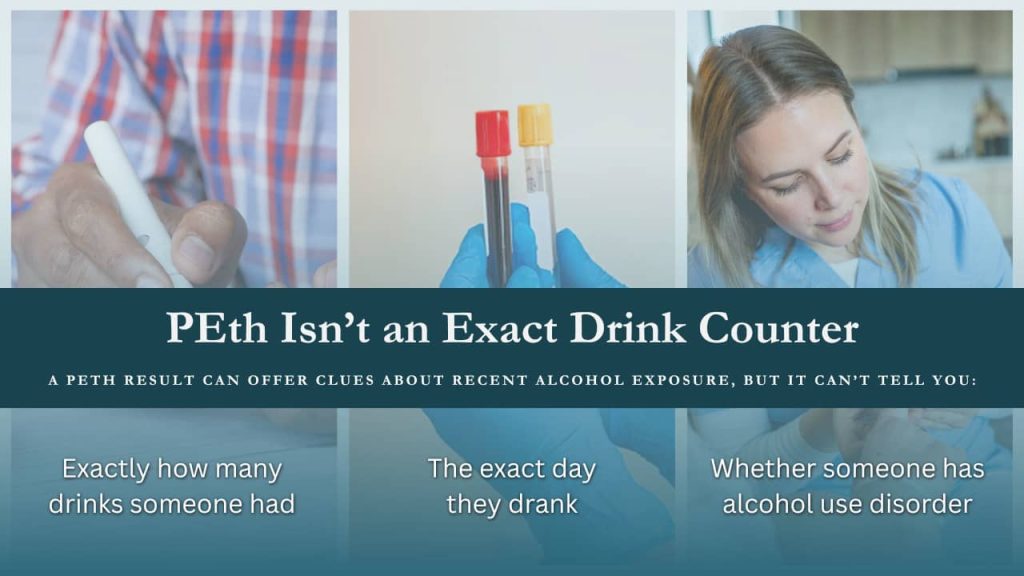
In general, higher PEth concentrations are associated with greater alcohol consumption at a population level. However, the relationship isn’t precise enough to determine exactly how many drinks a particular person consumed.
A large population study found a clear association between self-reported alcohol consumption and PEth concentration, while also emphasizing limitations surrounding proposed cutoff values.
PEth Levels Chart: What the Numbers Mean
You may find a PEth levels chart online assigning categories to specific values. One commonly discussed framework uses approximately:
- Below 20 ng/mL: often interpreted as compatible with abstinence or low alcohol exposure
- 20–200 ng/mL: may reflect alcohol consumption above very low levels
- Above 200 ng/mL: often associated with heavier alcohol consumption
These numbers should be treated as interpretive guidelines rather than a universal diagnostic scale. Research has found variability in optimal PEth cutoffs, and a PEth concentration cannot independently diagnose alcohol use disorder.
For the same reason, a very high result, such as a PEth level of 1000 ng/mL, should be interpreted by a qualified clinician rather than reverse-calculated into a presumed number of drinks. A high concentration may be consistent with substantial recent alcohol exposure, but the number alone doesn’t tell the full clinical story.
What Can Cause a False Positive PEth Test?
PEth is highly specific to ethanol exposure because ethanol is required for its formation. Still, there are important situations in which a positive result may not accurately represent the tested person’s own recent drinking.
One documented example is blood transfusion.
PEth is carried on red blood cells, and published case reports have demonstrated that transfused red blood cells can introduce PEth into a recipient’s blood. Researchers have reported patients with positive PEth results following transfusion despite evidence supporting abstinence.
This is particularly important when PEth results carry major consequences, such as during transplant evaluation.
Anyone who believes a result doesn’t match their alcohol use should discuss relevant medical circumstances with their healthcare provider rather than trying to interpret the result independently.
Can You Pass or Beat a PEth Test?
Searches for how to beat a PEth test, how to pass a PEth test, or how to lower PEth levels are common, particularly when someone is anxious about an upcoming test.
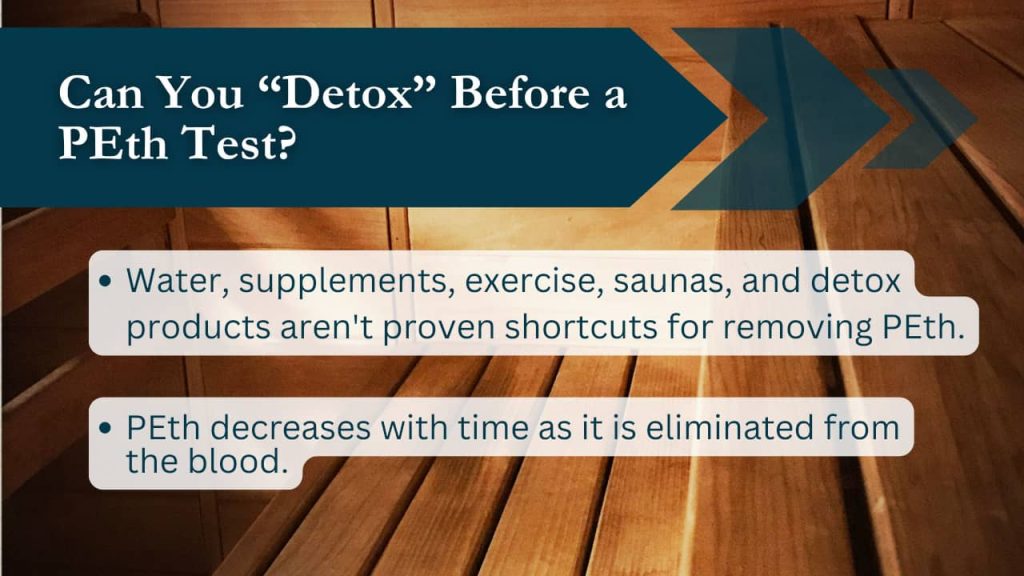
There isn’t a scientifically established quick fix that removes PEth from the blood.
Once PEth has formed, levels generally decrease over time as the biomarker is eliminated. Drinking water, exercising excessively, using a sauna, taking supplements, or attempting a “detox” cannot reliably erase PEth from red blood cells.
The dependable way to avoid new PEth formation is not to consume alcohol.
Do Home Remedies Actually Lower PEth Levels?
Internet advice may recommend large quantities of water, special diets, vitamins, detox drinks, exercise, or other supposed shortcuts.
These strategies shouldn’t be relied upon to change a PEth alcohol result. Similar shortcuts circulate for other tests too, such as using baking soda to pass a drug test, and they are no more reliable. Hydration and nutrition may help someone feel physically better after drinking, but that’s different from changing how PEth is eliminated from the bloodstream.
Attempting to manipulate a test can also distract from a more useful question: Why does the result feel so important or frightening?
For someone who is expected to abstain but is finding that difficult, the concern about an upcoming test may be an opportunity to ask for support.
Does a PEth Test Show Drugs?
No. A standard PEth test is designed to identify a biomarker associated with alcohol exposure, not other drugs.
A PEth result will not function as a general drug screen for substances such as cannabis, cocaine, opioids, benzodiazepines, or amphetamines.
If other substances need to be identified, separate blood, urine, hair, saliva, or other toxicology testing may be ordered.
This distinction matters because the phrase “drug and alcohol testing” sometimes makes it sound as though a single test detects everything. In reality, different tests look for different substances or biomarkers.
When a Test Result Raises a Bigger Question
Sometimes a PEth blood test is simply a laboratory result.
Other times, it raises questions that are harder to answer with a number.
Perhaps you’re surprised by the result. Maybe you’ve been trying to cut back but haven’t been able to. You might be hiding how much you’re drinking, feeling anxious about periods of required abstinence, or spending significant time trying to figure out whether alcohol will appear on a test.
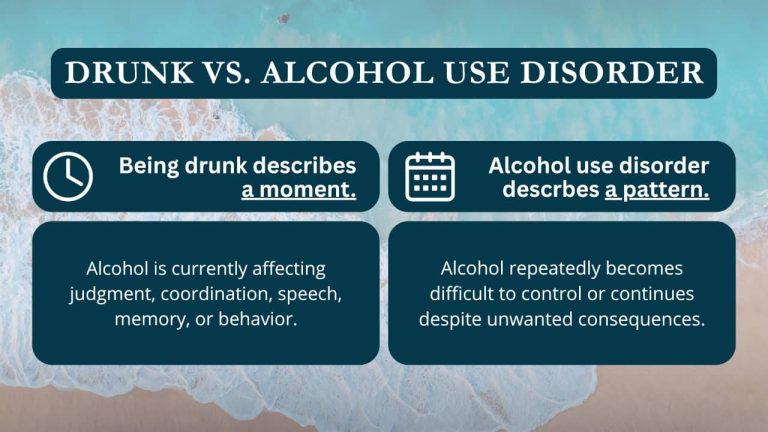
Those experiences don’t automatically mean someone has alcohol use disorder. But they can be signs of an unhealthy relationship with alcohol, and reasons to take a more honest look at the role it is playing.”
Questions worth considering include:
- Is it difficult for me to stop once I begin drinking?
- Have I repeatedly tried to drink less without succeeding?
- Am I drinking despite problems with my health or relationships?
- Do I hide or minimize my alcohol use?
- Does the thought of having to abstain make me unusually anxious?
- Has alcohol become one of my primary ways of managing stress?
A laboratory test can identify a biomarker. It cannot explain why someone drinks or what support they might need.
Looking Beyond the PEth Number at The Ohana Hawaii
At The Ohana Hawaii, inpatient drug and alcohol treatment goes beyond simply identifying whether someone has been drinking.
The goal is to understand the person behind the behavior.
Each client receives an individualized treatment plan based on their needs, experiences, and goals. Evidence-based approaches including Cognitive Behavioral Therapy (CBT), Dialectical Behavioral Therapy (DBT), psychodynamic therapy, trauma work, individual therapy, and group therapy can help clients examine the thoughts, emotions, experiences, and coping patterns connected to alcohol use.
The Ohana also incorporates holistic approaches such as yoga, meditation and mindfulness, ecopsychology, art therapy, massage, sound healing, and other practices designed to strengthen the connection between mind and body.
That combination matters because lasting recovery can’t be measured by a single blood test.
PEth Testing Is One Piece of the Picture
So, can a PEth test detect occasional drinking? It can, but not every isolated or low-level drinking episode will necessarily produce the same result or exceed the same cutoff.
PEth testing is valuable precisely because it can provide objective information about alcohol exposure over a longer period than many traditional tests. At the same time, individual variation means a PEth number shouldn’t be interpreted as an exact record of how many drinks someone consumed or precisely when they consumed them.
If concerns about testing are connected to difficulty reducing or stopping alcohol use, that may be the more important issue to address.
At The Ohana’s alcohol rehab in Hawaii, clients have the opportunity to move beyond monitoring alcohol use and begin understanding the patterns beneath it—with evidence-based treatment, holistic support, and individualized care focused on long-term recovery.