
If you’re living with or loving someone who struggles with alcohol, you may have heard phrases like:
- “I drink because you stress me out.”
- “If you weren’t so critical, I wouldn’t need alcohol.”
- “Everyone else is the problem—not me.”
When alcohol use escalates, blame often follows. Many people ask the same painful question: Why do alcoholics blame others for their drinking—and why does it so often feel personal? It’s part of a wider pattern many families recognize: addicts play the victim to soften shame and deflect accountability.
The truth is uncomfortable but important: blame is a common pattern in alcohol addiction, and while it may feel deeply hurtful, it’s rarely about you. Understanding why alcoholics blame others—and knowing what to do when they blame you—can help you protect your boundaries, your mental health, and your sense of reality.
Do Alcoholics Blame Others For Their Drinking Problems?
Yes—alcoholics often blame others, especially as their drinking begins to cause consequences they aren’t ready to face.
The Hard Truth Up Front: Blame Is Common, But It’s Not Fair
Alcohol use disorder thrives on avoidance. Blame allows someone to redirect attention away from their drinking and toward an external target—often a spouse, partner, or close family member. This doesn’t make the blame accurate, justified, or acceptable.
Many people wonder, “Do alcoholics blame others for their problems?” The answer is yes—not because others caused the addiction, but because blame temporarily reduces shame, fear, and accountability.
That relief is short-lived—but powerful enough to repeat.
What “Blame” Looks Like In Alcohol Addiction
Blame in addiction isn’t always obvious. It can be loud and angry—or subtle and manipulative.
The Pattern Behind The Pattern: Escalation, Deflection, Then Reset
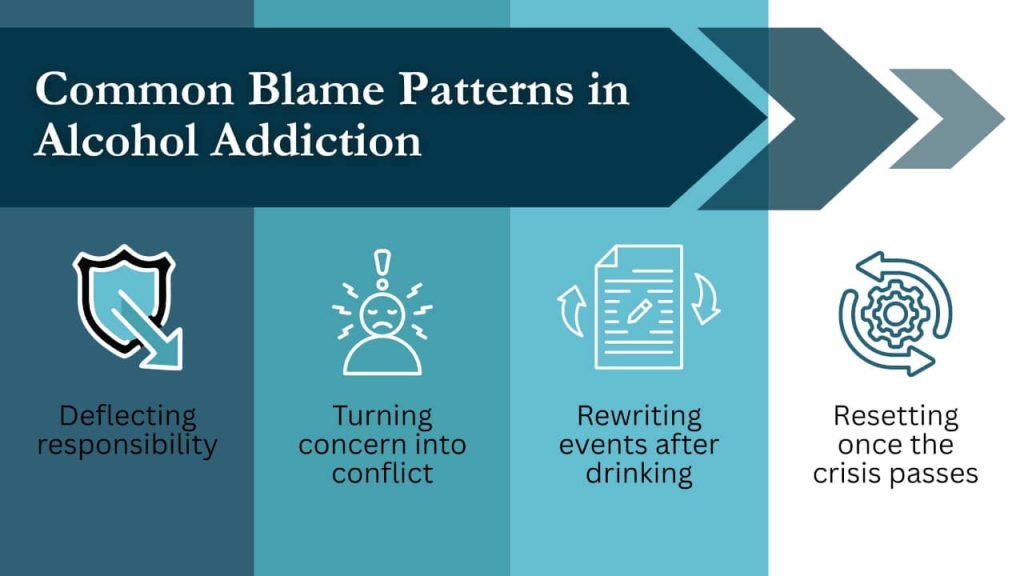
In many relationships affected by alcohol addiction, blame follows a predictable cycle:
- Escalation: Drinking increases, tension builds, and consequences begin to show up (missed work, arguments, health issues).
- Deflection: The person drinking shifts focus outward—blaming stress, relationships, work, or “everyone else.”
- Reset: After an argument or emotional release, things temporarily calm down—until the cycle repeats.
This is why many partners feel stuck. Each incident feels isolated, but the pattern itself is the problem.
Why Do Alcoholics And Addicts Blame Others?
People often ask, “Why do alcoholics blame others for their drinking?” or “Why do addicts blame everyone else for their problems?” The answer usually lies in a combination of psychology, fear, and neurobiology.
Alcohol addiction alters the brain systems responsible for self-reflection, impulse control, and emotional regulation. Over time, this makes it harder to tolerate discomfort—including guilt, responsibility, or perceived failure.
Blame serves several functions:
- It protects the ego from the pain of admitting loss of control.
- It reduces shame, which is often overwhelming in addiction.
- It avoids consequences by shifting responsibility elsewhere.
- It maintains access to alcohol, which the brain now prioritizes for relief.
This doesn’t excuse the behavior—but it explains why logic alone rarely breaks through blame.
Why Alcoholics Often Blame Their Spouse Or Partner
If you’re asking, “Why does my alcoholic husband blame me for everything?” you’re not alone. Partners are often the closest—and therefore easiest—target.
Why Your Alcoholic Husband Blames You For Everything (And What It Means)
An alcoholic spouse may blame their partner because:
- You’re the one noticing patterns and expressing concern.
Partners are often the first to recognize that drinking has crossed from “stress relief” into something more serious. Pointing out missed obligations, mood changes, or increased alcohol use can feel threatening to someone in addiction. Rather than seeing concern as care, the addicted brain may interpret it as criticism or control, making blame a defensive response. - You represent accountability and reality.
A partner often holds up a mirror—reflecting consequences, broken promises, or patterns the person drinking would rather avoid. Accountability disrupts denial, and denial is what allows addiction to continue comfortably. Blaming you helps deflect attention away from the uncomfortable truth that alcohol is causing real harm. - You’re emotionally safe enough to absorb anger they can’t express elsewhere.
Many people struggling with addiction suppress anger, shame, or fear in public settings like work or social environments. At home, those bottled-up emotions often come out toward the person they feel safest with—even when it’s unfair. This doesn’t mean the blame is justified; it means the relationship has become a container for emotions they don’t know how to process. - Your presence triggers guilt they don’t want to feel.
Seeing the impact of their drinking on someone they love can activate deep guilt or self-loathing. Instead of tolerating that discomfort, the mind looks for an escape—and blame offers one. By shifting responsibility onto their partner, they can temporarily avoid confronting the pain of knowing their actions are hurting someone they care about.
When an alcoholic husband blames his wife—or a partner blames their significant other—it’s often a sign that you’re closest to the truth, not the cause of the problem.
Unfortunately, repeated blame can erode self-confidence and lead partners to question their own judgment, memory, or worth.
Do Alcoholics Blame Others For Their Problems Beyond Drinking?
Yes. As addiction progresses, blame often expands beyond alcohol itself. Alcoholics may blame others for:
- Financial stress. Money problems caused by drinking—such as missed work, impulsive spending, or mounting debt—are often attributed to a partner’s spending habits, lack of support, or external pressures rather than alcohol use. This deflection helps avoid facing the real source of financial instability.
- Relationship breakdowns. Strained relationships are frequently blamed on a partner being “too critical,” “unsupportive,” or “controlling,” even when the conflict stems from broken trust, emotional unavailability, or alcohol-related behavior. Blame shifts responsibility away from drinking and onto the people closest to them.
- Job loss or underperformance. Missed deadlines, poor performance, or termination may be blamed on a demanding boss, workplace stress, or unfair expectations. Alcohol’s impact on focus, reliability, and judgment is minimized or ignored to protect the person’s self-image.
- Emotional instability. Mood swings, anger, anxiety, or depression are often framed as reactions to others’ behavior rather than consequences of alcohol’s effects on the brain and nervous system. This reinforces the belief that drinking is a response to emotional distress, rather than a contributing cause.
- Health concerns. Physical symptoms like fatigue, digestive issues, high blood pressure, or sleep problems may be blamed on stress, aging, or genetics. Acknowledging alcohol as a factor would require confronting the toll it’s taking on the body, which can feel overwhelming or threatening.
This is why many loved ones feel like they’re “walking on eggshells.” The blame doesn’t stay contained—it spreads.
Understanding that alcoholics blame others for their problems as a coping mechanism can help you stop internalizing accusations that aren’t yours to carry.
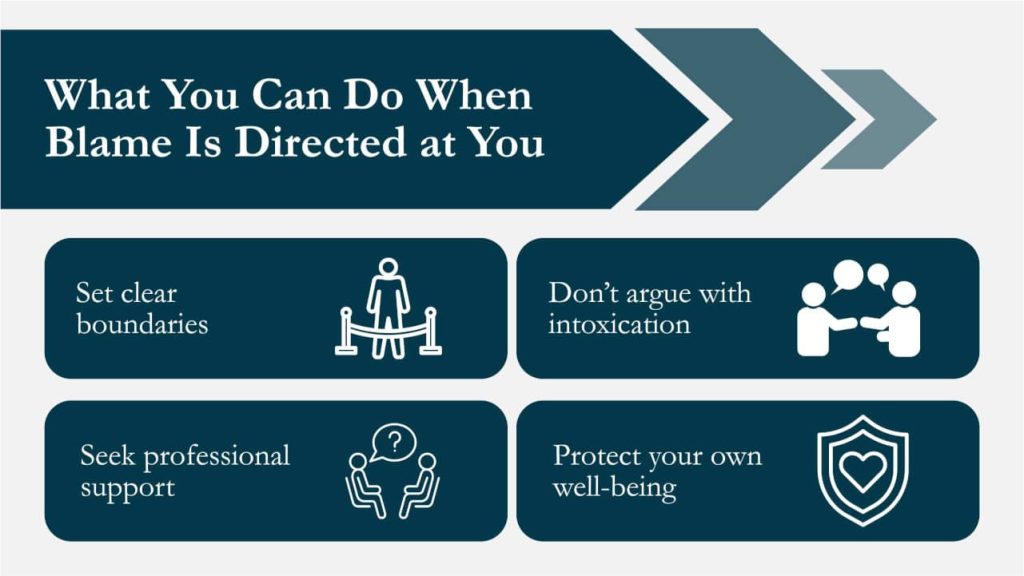
What To Do When An Alcoholic Blames You
Knowing why blame happens doesn’t make it hurt less—but it can guide your response.
Separate Responsibility From Compassion
You can care deeply about someone while still refusing responsibility for their drinking. Their emotions may be real; their accusations are not facts.
Try grounding statements like:
- “I’m willing to talk, but I won’t accept blame for your drinking.”
- “I care about you, and I’m not the cause of this.”
- “We can discuss solutions, not accusations.”
Don’t Argue With Distorted Logic
Addiction-driven blame often isn’t logical—and trying to “prove” your innocence can pull you into endless circular conversations. You don’t need to convince someone who isn’t ready to hear the truth.
Set Clear Emotional Boundaries
Boundaries aren’t punishments. They’re protection. This might look like:
- Ending conversations when blame turns abusive. When discussions shift from concern to accusations, insults, or emotional manipulation, continuing the conversation often escalates harm rather than resolution. Ending the conversation calmly—by leaving the room, hanging up the phone, or saying “I’m not going to engage when I’m being blamed”—protects your emotional well-being. This boundary communicates that respectful communication is required for any meaningful conversation to continue.
- Refusing to engage when alcohol is involved. Alcohol lowers inhibition and increases emotional reactivity, making productive dialogue unlikely. Choosing not to discuss serious topics when your partner is drinking isn’t avoidance—it’s wisdom. This boundary helps prevent circular arguments, gaslighting, or verbal aggression and reinforces that important conversations require sobriety and clarity.
- Seeking space when interactions feel unsafe. If interactions trigger fear, anxiety, or emotional distress, creating physical or emotional space is an act of self-preservation. This may mean staying elsewhere for the night, asking for time apart, or limiting contact during volatile periods. Safety—emotional and physical—comes first, and distance can provide the breathing room needed to regain stability and perspective.
Get Support For Yourself
Living with blame can be emotionally exhausting and isolating. Support groups, therapy, or professional guidance can help you rebuild clarity and resilience.
When Blame Signals A Need For Professional Help
Blame often intensifies as addiction worsens. If your loved one consistently blames others, denies responsibility, and escalates emotionally, it may be time to involve outside support.
At The Ohana Hawaii Rehab, clinicians understand how blame functions within addiction—and how to address it without reinforcing shame or defensiveness. Through trauma-informed, evidence-based treatment, individuals are guided toward accountability that feels possible, not overwhelming.
A Path Forward—For Both Of You
Blame may feel personal, but it’s a symptom—not a diagnosis of your worth, effort, or love. Alcohol addiction distorts perception, relationships, and communication, often leaving loved ones carrying emotional weight that was never theirs.
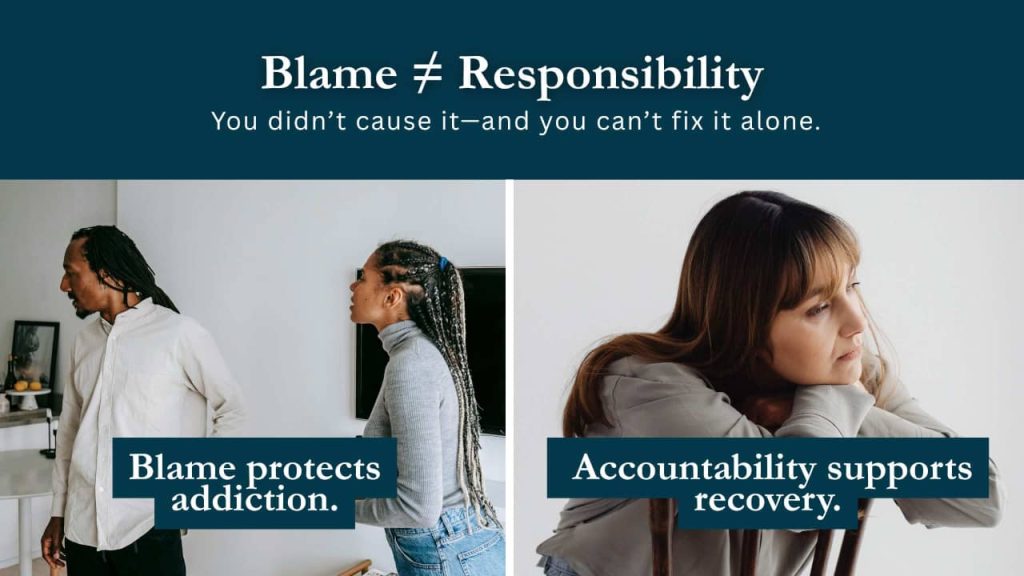
If you’re asking “What do I do when an alcoholic blames me?” the answer begins with this truth: you didn’t cause the addiction, and you can’t fix it alone.
Healing—whether for the person drinking or the people affected—often requires compassionate, professional support. Programs like those at The Ohana luxury rehab offer space for accountability, healing, and reconnection—without blame.
If you or someone you love is stuck in cycles of drinking, denial, and blame, reaching out could be the first step toward clarity and relief.
You don’t have to carry this by yourself. Reach out for support today.